


A defined abdominal contour is one of the most requested goals in body shaping. Many people exercise regularly, follow a careful diet, and still feel that their midsection does not reflect the effort they put in. In some cases, the issue is not a lack of muscle, but the way a thin layer of fat covers the natural lines of the abdomen. That is why abdominal definition procedures continue to attract attention.
Unlike general slimming procedures, abdominal etching is not mainly about reducing size. It is about creating a more sculpted look by making the natural transitions of the abdominal area more visible. The focus is not simply on flattening the stomach, but on refining the contours so the midsection appears more athletic, more structured, and more balanced.
Six Pack Surgery is typically discussed as a contouring procedure designed to highlight the natural shape of the abdominal muscles. The idea is not to create muscles that are not there. The goal is to selectively shape the fat layer over the abdomen so the body’s existing muscle framework becomes more visible.
What Is Six Pack Surgery?
Six pack surgery, also known as abdominal etching, is a body contouring procedure aimed at creating more visible abdominal definition. It is usually considered by people who already have a relatively fit body shape but feel that the abdominal lines still look soft or blurred.
This procedure is not the same as standard fat removal. A traditional approach may focus more on reducing volume across a wider area. Abdominal etching is more detailed. It works with the natural anatomy of the abdomen, paying attention to the midline, the horizontal muscle intersections, and the surrounding transitions that create a more athletic look.
Table of Contents
ToggleIs the Goal to Build Muscle?
No. This procedure does not build muscle. Muscle development still comes from exercise, training, and overall body composition. What the procedure aims to do is reveal the structure that is already present by reducing the layer that hides it.
Why Is It Different From General Liposuction?
Because the goal is not only to remove fat. The goal is to shape the abdominal surface in a way that looks more defined and structured. It is a contouring approach rather than a simple reduction approach.
How Is It Performed?
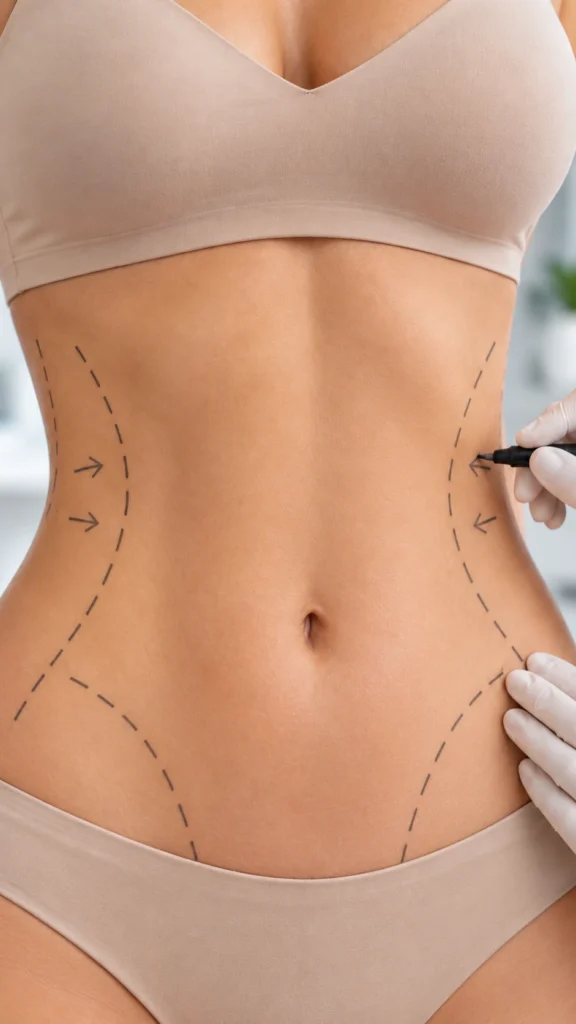
The procedure is generally planned around the natural map of the abdomen. Before anything else, the abdominal contours are carefully evaluated. This includes the central line of the abdomen, the side transitions, the upper and lower abdominal areas, and the overall relationship between the waist and the stomach.
The main idea is to reduce fat more selectively in certain areas while preserving natural transitions in others. This creates contrast across the abdominal surface, which is what allows the muscle lines to appear more visible. The process is not about making the abdomen look artificially carved. A well-balanced result should still look connected to the rest of the body.
Why Is Planning So Important?
Because abdominal definition depends on proportion. If the shaping is too shallow, the result may not be visible enough. If it is too aggressive, the abdomen may look unnatural. The most successful results usually come from controlled planning rather than overcorrection.
Does the Entire Abdomen Get Treated the Same Way?
No. Different parts of the abdomen are not treated identically. The center line, upper contours, and side transitions may all require different levels of attention depending on the body’s natural anatomy and the type of definition being planned.
Which Areas Matter Most in Abdominal Etching?
A defined abdomen is not created by one line alone. It depends on how several areas relate to each other.
Central Abdominal Line
This is one of the most important visual markers of a structured midsection. When it becomes more visible, the abdomen often looks firmer and more athletic.
Horizontal Muscle Transitions
These are the natural interruptions that help create the classic segmented appearance. Their visibility depends on anatomy, body fat distribution, and how the contour is shaped.
Waist-to-Abdomen Relationship
A defined abdomen looks stronger when the waist and surrounding contours support it. That is why abdominal etching is often seen as part of overall torso sculpting rather than an isolated stomach procedure.
Who Usually Considers This Procedure?
Six pack surgery is usually considered by people who are already relatively close to their desired shape but want more visible abdominal definition. It is often more appealing to those who do not want general weight loss, but rather a sharper and more athletic contour.
In many cases, the interest comes from frustration rather than vanity. Someone may already live an active lifestyle and still feel that the midsection looks softer than expected. For that reason, the procedure is often seen as a finishing contouring step rather than a starting point.
Is It Meant for Weight Loss?
No. This is not a weight-loss procedure. It is generally associated with contour refinement rather than major body reduction.
Does Everyone Get the Same Look?
No. The final appearance depends heavily on natural anatomy, muscle structure, skin quality, and fat distribution. A good result should fit the body rather than force one standard template onto every person.
What Happens Right After the Procedure?
The early healing period usually includes swelling, tightness, and tenderness in the abdominal area. This is expected. Since the abdomen is being shaped in a detailed way, the final contour is not visible immediately.
At first, the area may even look flatter or fuller than expected because swelling can blur the newly created lines. This is one of the reasons why early impressions are often misleading. The body needs time to settle before the refined abdominal contours start to appear more clearly.
Why Doesn’t the Final Definition Show Immediately?
Because healing comes before refinement. Swelling temporarily softens the details, so the final definition usually becomes more visible only after the tissues calm down.
What Kind of Result Is Usually Considered Successful?
A successful result is not one that looks aggressively etched. It is one that creates a more athletic-looking abdomen while still appearing natural on the body. The lines should feel believable, not drawn on. The transitions should look clean, not harsh. The abdomen should appear more defined, but still in harmony with the person’s frame.
This is especially important because the abdomen is a very visible area. Anything too exaggerated can easily look artificial. In contrast, a balanced result often looks more sophisticated and more convincing.
Why Is Natural Appearance So Important Here?
Because the best contouring does not look obvious. It looks like the body simply reveals its structure more clearly. That is usually what makes the result feel strong without feeling excessive.
How Should This Procedure Be Understood Overall?
Six pack surgery should be understood as a body contouring procedure rather than a shortcut to fitness. It does not replace exercise, and it does not create muscle from nothing. Instead, it works by refining the fat layer over the abdomen so the body’s natural muscular structure becomes easier to see.
For many people, that is exactly what makes the procedure appealing. It is not about becoming a different version of the body. It is about making the existing shape look more defined, more athletic, and more aligned with the effort already being made.
Six pack surgery, or abdominal etching, is performed by selectively shaping the fat layer over the abdomen to reveal the natural lines of the abdominal muscles more clearly. Its purpose is not to build muscle, but to refine contour. That is what separates it from more general fat-reduction procedures.
Would You Like to Get Detailed Information About Our Procedures?