


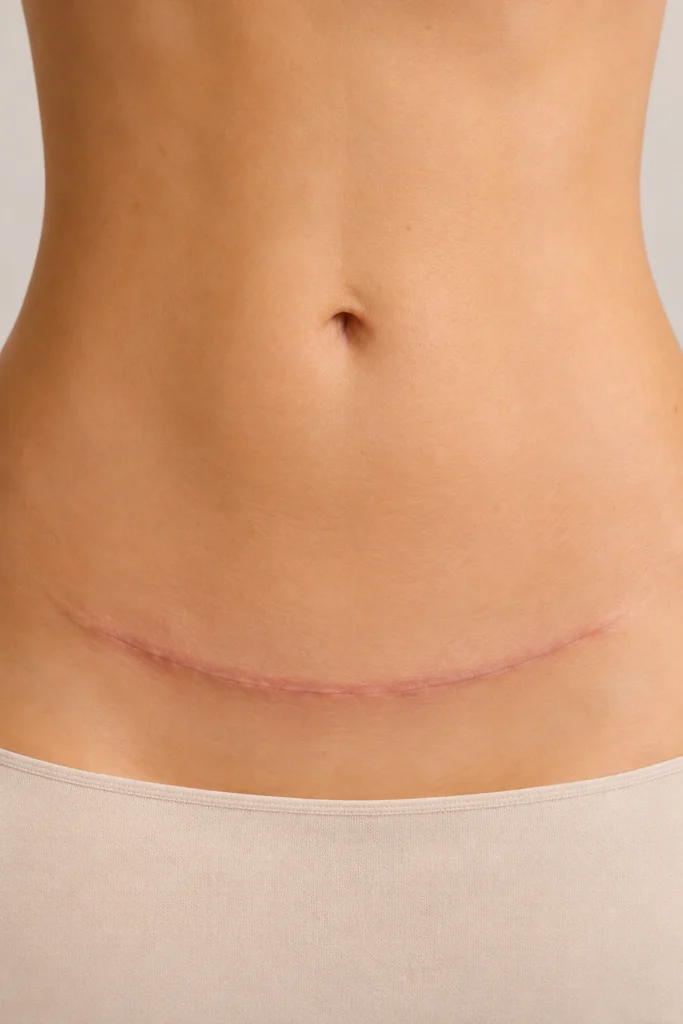
Tummy Tuck Scar: Where It Sits and How It Fades Over Time explains why the scar usually sits low across the abdomen and how its appearance changes during healing. Surgeons generally place the main incision just above the pubic area, where underwear or swimwear can often conceal it. The scar typically looks pink, red, or slightly raised during the first few months before gradually becoming flatter and lighter. Most scars continue maturing for 12 to 18 months, although individual healing patterns influence their final appearance.
For many patients, the thought of a permanent scar raises more questions than the surgery itself. Will it show in a bikini? How long will it stay red? Can scar treatments make it less noticeable? Understanding what happens during recovery helps patients prepare for these changes and set realistic expectations.
Table of Contents
ToggleWhere Is a Tummy Tuck Scar Located?
The location of an abdominal scar depends on the surgical technique, the amount of excess skin, and the patient’s body proportions.
During abdominoplasty, surgeons typically create a horizontal incision across the lower abdomen. They plan its position according to the amount of tissue they need to remove and the tension required to close the incision.
Patients exploring Body Surgeries in Istanbul, Turkey often want to understand how different body contouring procedures affect scarring, recovery, and long-term appearance.
Is a Tummy Tuck Scar Below the Bikini Line?
Surgeons generally aim to place the incision low enough for underwear or swimwear to conceal most of the scar.
However, individual anatomy influences the final position. Very low-cut bikini bottoms may reveal portions of the incision, particularly near the hips.
Patients considering tummy tuck surgery should discuss their preferred clothing styles during the consultation. This helps the surgeon explain realistic incision placement before the procedure.
Does a Tummy Tuck Leave a Scar Around the Belly Button?
A full abdominoplasty usually creates a second scar around the belly button.
The surgeon preserves the original navel and brings it through the repositioned abdominal skin. This requires a separate incision around its opening.
Over time, the surrounding skin folds may help camouflage the scar, although its visibility varies.
What Does a Tummy Tuck Scar Look Like After Surgery?
A fresh surgical scar rarely looks like the thin, pale line patients see in photographs of fully healed abdomens.
During early recovery, the incision may appear red, pink, swollen, or slightly raised. These changes reflect the body’s normal healing response.
Is Redness Around the Scar Normal?
Mild redness along a healing incision is common. New blood vessels deliver oxygen and nutrients to the recovering tissue, making the area appear more colorful.
However, spreading redness, increasing warmth, worsening pain, fever, or unusual drainage may signal an infection.
Patients who notice these symptoms should contact their surgical team promptly.
Why Does the Scar Feel Tight or Numb?
Abdominal surgery affects skin, connective tissue, and small sensory nerves.
As the area heals, patients may experience tightness, tingling, pulling sensations, or reduced sensitivity around the incision.
These sensations often improve gradually. However, some patients experience lasting changes in sensation.
How Does a Tummy Tuck Scar Fade Over Time?
Scar fading happens gradually as the body reorganizes collagen and strengthens the healing tissue.
The process varies between individuals, but several general stages help explain what patients can expect.
Tummy Tuck Scar After 1 Month
During the first month, the incision often remains pink or red.
Some swelling, firmness, and sensitivity may persist. Patients should focus on wound care and follow their surgeon’s activity restrictions rather than judging the final scar appearance.
Tummy Tuck Scar After 3 Months
At three months, the scar may still look prominent.
Some scars become darker, firmer, or slightly raised during this stage because collagen production remains active.
This does not necessarily indicate abnormal healing. Scar remodeling continues for many months.
Tummy Tuck Scar After 6 Months
By six months, many patients notice less redness and improved tissue flexibility.
The incision may begin looking flatter and softer. However, pigmentation differences and mild thickening can remain.
Tummy Tuck Scar After 12 to 18 Months
Many scars become noticeably lighter and flatter within 12 to 18 months.
Some continue changing for two years or longer.
The final scar may look pale, slightly darker than the surrounding skin, or more noticeable in certain areas.
Mini Tummy Tuck vs Full Tummy Tuck: Which Leaves a Bigger Scar?
Scar length represents an important difference between mini and full abdominoplasty.
A mini procedure generally creates a shorter incision because the surgeon focuses on excess skin below the belly button.
A full procedure usually requires a longer incision and an additional scar around the navel.
Does a Mini Tummy Tuck Leave a Small Scar?
A mini abdominoplasty typically produces a shorter horizontal scar across the lower abdomen.
However, its exact length depends on the amount of excess skin and the patient’s anatomy.
A mini procedure does not suit everyone, particularly patients with significant loose skin above the belly button.
Does a Full Tummy Tuck Always Leave a Hip-to-Hip Scar?
Not every full abdominoplasty creates an identical incision.
Some patients require longer scars to address extensive excess skin, while others need less lateral extension.
Surgeons balance incision length, abdominal contour, and wound tension when planning the procedure.
Can You Make a Tummy Tuck Scar Less Noticeable?
Although no treatment completely removes a surgical scar, appropriate postoperative care may improve its appearance.
Patients researching tummy tuck in Turkey should understand that scar management continues well beyond the initial recovery period.
Does Silicone Gel Help Tummy Tuck Scars?
Silicone gels and sheets can help manage certain raised or thickened scars.
They maintain hydration over the healed skin and may improve scar texture and thickness.
Patients should begin silicone treatment only after the incision has completely closed and their surgeon approves its use.
Can Scar Massage Help?
Gentle scar massage may improve tissue flexibility and reduce tightness in some patients.
However, massage should begin only after sufficient healing and medical approval.
Applying pressure too early may irritate the incision or interfere with recovery.
Does Sun Exposure Make Scars Darker?
Ultraviolet radiation can contribute to persistent pigmentation changes in healing scars.
Patients should protect the area from direct sunlight, particularly during the first year.
Clothing coverage and appropriate sunscreen after wound closure can help limit unwanted discoloration.
Why Do Some Tummy Tuck Scars Become Thick or Dark?
Every person’s skin responds differently to surgical incisions.
Some patients develop thin, pale scars, while others experience thicker or darker scar tissue.
What Causes Raised Scars?
Hypertrophic scars develop when the body produces excess collagen within the original incision boundaries.
Several factors influence this response:
Genetic predisposition
Skin tension
Delayed wound healing
Infection or inflammation
Previous history of raised scars
Individual collagen production
Keloid scars differ because they extend beyond the original wound boundaries.
Patients with a history of abnormal scarring should discuss this during their consultation.
Can Dark Scars Become Lighter?
Some patients develop post-inflammatory hyperpigmentation, which makes the scar appear darker than the surrounding skin.
These marks may gradually fade, but the process can take many months.
Sun protection and appropriate medical guidance can help patients manage pigmentation concerns.
Can Laser Treatment Improve a Tummy Tuck Scar?
Laser treatments may improve certain scar characteristics, including redness, pigmentation, and uneven texture.
However, the appropriate treatment depends on the scar’s condition and the patient’s skin characteristics.
When Can You Start Laser Scar Treatment?
Some laser treatments target redness during earlier stages of scar development, while others address texture after further healing.
The surgeon or treating specialist determines the appropriate timing.
Patients should avoid scheduling laser procedures without a professional assessment.
Can Laser Treatment Completely Remove the Scar?
No. Laser treatment cannot erase a surgical scar.
However, selected procedures may make certain scars less noticeable by improving color, texture, or thickness.
Some patients require multiple sessions, and treatment responses vary.
Can a Tummy Tuck Scar Stretch or Become Wider?
A healing abdominal incision experiences tension during movement.
Standing upright, bending, lifting, and exercising all affect the surrounding tissues.
Excessive strain during early recovery may contribute to scar widening or wound separation.
What Activities Can Affect Scar Healing?
Heavy lifting, strenuous abdominal exercise, and sudden stretching movements can place additional tension on the incision.
Patients should follow their surgeon’s recovery instructions and return to physical activity gradually.
Smoking and poorly controlled medical conditions can also interfere with wound healing.
Does Weight Gain Change the Scar?
Significant weight fluctuations can stretch the abdominal skin and alter the appearance of the surrounding tissue.
Although the scar remains in place, its width or visibility may change.
Maintaining a relatively stable weight helps preserve the abdominal contour after surgery.
Will a Tummy Tuck Scar Show in a Bikini?
Many patients worry about wearing swimwear after surgery.
Surgeons generally aim to position the main incision within an area that common underwear and bikini bottoms can conceal.
However, clothing styles and body proportions affect visibility.
Can You Choose Where the Scar Sits?
Patients can discuss their preferences, but anatomy determines the practical limits of incision placement.
The surgeon must consider excess skin distribution, tissue tension, and the amount of correction required.
Placing the incision too low may create unnecessary tension or compromise the abdominal contour.
Can You Cover the Scar With Makeup?
Once the incision has fully healed, some patients use body makeup to reduce visible color differences.
However, makeup should never cover an open wound or irritated skin.
Patients should ask their surgeon when cosmetic products are appropriate.
How Do You Choose a Surgeon Who Understands Scar Placement?
An experienced aesthetic plastic surgeon evaluates abdominal anatomy, skin quality, previous scars, and individual healing risks before planning surgery.
Scar placement involves more than creating the shortest possible incision. The surgeon must balance effective skin removal with appropriate tissue tension and a natural abdominal contour.
During the consultation, patients can ask about expected scar length, belly button scarring, recovery restrictions, and postoperative scar care.
Photographs of fully healed incisions from patients with similar anatomy may also help establish realistic expectations.
Frequently Asked Questions About Tummy Tuck Scars
1. Will My Tummy Tuck Scar Ever Disappear Completely?
No. A surgical scar remains permanent because the incision changes the skin’s structure. However, many scars become flatter, lighter, and less noticeable over 12 to 18 months. Genetics, skin characteristics, and healing conditions influence the final appearance.
2. How Long Does It Take for a Tummy Tuck Scar to Turn White?
Many scars gradually fade from red or pink toward a lighter shade over 12 to 18 months. Some take longer, while others remain darker than the surrounding skin. A scar does not need to turn completely white to indicate normal healing.
3. Is a Tummy Tuck Scar Visible in Underwear?
Surgeons generally aim to position the main incision low enough for common underwear styles to cover it. However, very low-cut garments may reveal parts of the scar, particularly near the hips. The final location depends on individual anatomy and surgical planning.
4. When Can I Start Using Scar Cream After a Tummy Tuck?
Patients should wait until the incision has completely closed and their surgeon approves scar products. Applying creams or silicone treatments to an open wound may irritate the tissue. The appropriate starting time depends on individual healing progress.
5. Can a Tummy Tuck Scar Be Revised if It Heals Poorly?
Yes. Selected patients may benefit from scar revision when the incision develops significant widening, thickening, or contour irregularities. Treatment options include silicone therapy, injections, laser procedures, and surgical revision. The surgeon evaluates scar maturity and individual healing before recommending an approach.