


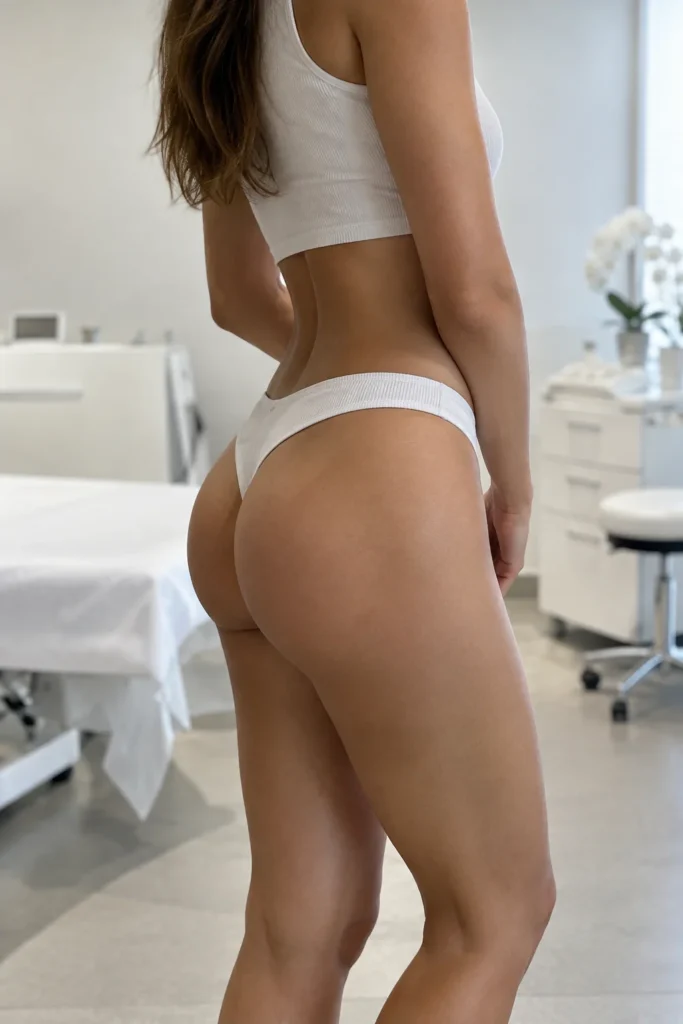
Skinny BBL in Turkey: Can You Get a BBL If You Are Slim? Yes, slim patients may still qualify for a Brazilian Butt Lift, as long as they have enough donor fat in suitable areas of the body. A Skinny BBL focuses on collecting smaller amounts of fat from areas such as the abdomen, waist, lower back, thighs, or flanks and strategically transferring it to the buttocks. Rather than creating dramatic volume, the procedure usually aims for balanced curves, improved proportions, and a natural-looking enhancement that suits a slimmer frame.
Table of Contents
ToggleWhat Is a Skinny BBL?
A Skinny BBL is a variation of the traditional Brazilian Butt Lift designed for people who have a relatively low body fat percentage or naturally slim body shape. The basic principle remains the same: the surgeon removes fat from selected areas through liposuction, processes the collected fat, and transfers it to specific areas of the buttocks.
The main difference lies in the amount of available fat and the aesthetic goal. A traditional BBL may involve larger volumes of fat transfer, while a Skinny BBL generally works with more limited fat reserves. This makes planning especially important.
For slim patients, even relatively small changes in the waist, hips, and buttocks can noticeably influence body proportions. Removing localized fat around the waist, for example, may help define the transition between the waist and hips. Adding carefully planned volume to the buttocks can then support a smoother and more proportional silhouette.
Patients considering Brazilian Butt Lift in Turkey often assume that they need significant body fat to qualify. However, body weight alone does not determine suitability. Fat distribution, skin quality, anatomy, expectations, and general health also play important roles.
Can You Get a BBL If You Are Slim?
Being slim does not automatically prevent you from having a BBL. The key question is whether your body has enough suitable donor fat for the surgeon to collect and transfer.
Some slim people still carry small fat deposits around the lower abdomen, waist, flanks, lower back, inner thighs, or outer thighs. These areas may provide enough donor fat for a subtle enhancement. A surgeon evaluates these areas individually because two people with the same height and weight can have very different fat distribution patterns.
Skinny BBL candidates also need realistic expectations. When donor fat is limited, the procedure usually cannot create the same degree of volume that might be achievable in someone with larger fat reserves. Instead, the focus often shifts toward contour, symmetry, hip-to-waist proportions, and targeted enhancement.
This distinction matters when researching BBL in Turkey. A successful treatment plan should reflect the patient’s existing anatomy rather than attempt to reproduce a specific body shape seen in photographs or on social media.
Where Does the Fat Come From for a Skinny BBL?
A Skinny BBL requires surgeons to identify donor areas carefully. Instead of relying heavily on one area, the treatment plan may involve collecting smaller amounts of fat from several locations.
Common donor areas include:
Abdomen
Lower abdomen
Waist
Flanks
Lower back
Inner thighs
Outer thighs
The exact areas depend on the patient’s body composition. The surgeon examines where fat naturally accumulates and how liposuction from those areas may influence the overall silhouette.
Liposuction itself plays an important aesthetic role in a Skinny BBL. Removing fat from around the waist and lower back can create greater visual contrast between the waist and hips. This means the final appearance depends not only on how much fat the surgeon transfers but also on how the surgeon reshapes the surrounding areas.
This approach connects Skinny BBL with the broader principles used in Body Surgeries in Turkey, where surgeons consider overall proportions rather than treating one body area in isolation.
How Does a Skinny BBL Work?
The Skinny BBL process generally includes several stages. Each stage contributes to both body contouring and fat transfer.
First, the surgeon evaluates the patient’s anatomy and identifies potential donor areas. This stage helps determine how much fat the surgeon may realistically collect and what type of change that amount could support.
During liposuction, the surgeon removes fat from selected areas. The procedure aims to collect usable fat while also improving the contour of the donor areas.
After collection, the surgical team prepares the harvested fat for transfer. The surgeon then places the prepared fat strategically according to the treatment plan and current safety principles.
The goal is not simply to add volume. Placement influences projection, shape, symmetry, and the transition between the hips and buttocks. For a slim patient, small differences in placement can create noticeable changes in proportion.
Because Skinny BBL requires careful planning with limited donor fat, choosing an experienced aesthetic plastic surgeon plays an important role in developing realistic goals based on the patient’s anatomy.
What Results Can You Expect from a Skinny BBL?
Skinny BBL results often look more subtle than high-volume BBL results. This can suit patients who want to maintain a naturally slim appearance while adding more shape to the hips and buttocks.
Depending on anatomy and available donor fat, the procedure may help create:
More visible waist definition
Smoother hip contours
Improved balance between the waist and buttocks
Additional projection
Greater symmetry
A more proportionate silhouette
It is important to understand that the amount of fat transferred does not directly determine whether the final appearance looks balanced. The relationship between the waist, hips, thighs, and buttocks matters just as much.
For example, strategic liposuction around the waist may visually enhance the buttocks even when the surgeon transfers a relatively modest amount of fat. This is why Skinny BBL planning often focuses heavily on proportion rather than maximum volume.
How Is a Skinny BBL Different from a Traditional BBL?
The main difference between a Skinny BBL and a traditional BBL involves the patient’s available donor fat.
Traditional BBL candidates may have larger fat deposits available for liposuction. This gives the surgeon more flexibility regarding the amount of fat available for transfer. Skinny patients usually provide smaller fat reserves, so the surgeon needs to use those reserves strategically.
The aesthetic goals may also differ. Some traditional BBL procedures focus on a noticeable increase in volume and projection. Skinny BBL procedures more commonly prioritize subtle enhancement, contour definition, and proportion.
This does not mean that every slim patient receives the same result. Bone structure, pelvis width, waist size, muscle development, skin elasticity, and natural fat distribution all affect the final shape.
Do You Need to Gain Weight Before a Skinny BBL?
Some patients wonder whether gaining weight before surgery could provide more donor fat. This approach does not suit everyone and should not become a self-directed strategy.
Weight gain does not guarantee that the body will store fat in areas that surgeons can effectively use for liposuction. People also gain and lose fat differently according to genetics, lifestyle, hormones, and individual body composition.
Rapid or temporary weight changes can also make long-term body contouring goals harder to predict. A stable weight generally gives the surgeon a clearer picture of the patient’s usual proportions and available fat reserves.
If the body does not provide enough donor fat, the surgeon can discuss whether a fat-transfer procedure matches the patient’s expectations or whether another approach would make more sense.
Who May Be Suitable for a Skinny BBL?
Suitability depends on much more than being thin. A consultation typically considers general health, anatomy, fat distribution, skin characteristics, lifestyle, and expectations.
A potential candidate may have a stable body weight, small but usable fat deposits, and realistic expectations about the amount of enhancement achievable with their available tissue.
Patients should also understand that transferred fat behaves like fat elsewhere in the body. Significant future weight fluctuations may change body proportions and affect the appearance over time.
Personal goals matter as well. Someone seeking a modest improvement in hip contour may have very different requirements from someone seeking a substantial increase in buttock volume. Clear communication helps align the surgical plan with realistic anatomical possibilities.
What Should You Consider Before a Skinny BBL in Turkey?
People considering a Skinny BBL in Turkey should look beyond before-and-after photographs. The consultation should include a detailed discussion about anatomy, available donor fat, expected degree of enhancement, surgical technique, recovery, and potential risks.
BBL procedures require particular attention to surgical safety because fat placement technique matters. Patients should ask how the surgeon approaches fat transfer, where the fat will go, what safety protocols the surgical team follows, and what postoperative monitoring the clinic provides.
It also helps to discuss what “natural” means to you. One patient may want subtle hip rounding, while another may prioritize projection or waist definition. Sharing these preferences gives the surgeon clearer guidance when planning the procedure.
Recovery After a Skinny BBL
Recovery varies according to the extent of liposuction, the amount of fat transfer, individual healing patterns, and the surgeon’s postoperative plan.
Swelling and bruising commonly affect both the liposuction areas and the treated buttock region during the early recovery period. Because swelling changes gradually, the body contour seen immediately after surgery does not represent the final appearance.
Patients also receive specific instructions about sitting, sleeping positions, compression garments, movement, exercise, and returning to daily activities. These recommendations can vary, so patients should follow the instructions provided for their individual procedure.
The body also needs time to establish the longer-term fat-transfer outcome. Not every transferred fat cell remains permanently, which means early volume can change during recovery. Surgeons account for this biological process when planning the procedure, but the degree of fat retention differs from person to person.
Frequently Asked Questions About Skinny BBL in Turkey
1. Can very skinny people get a BBL?
Some very slim people may still have enough donor fat for a modest fat transfer. The surgeon needs to evaluate the abdomen, waist, back, thighs, and other potential donor areas to determine whether the available amount can support the patient’s goals.
2. How much fat do you need for a Skinny BBL?
There is no single amount that applies to every patient. The required volume depends on existing anatomy, donor areas, desired changes, and the surgical plan. A personalized assessment gives a more meaningful answer than a fixed number.
3. Does a Skinny BBL look natural?
A Skinny BBL often focuses on subtle changes that complement a slim body frame. Strategic liposuction and carefully planned fat placement can support a balanced appearance without creating excessive volume.
4. Is Skinny BBL recovery different from regular BBL recovery?
The basic recovery principles are similar because both procedures combine liposuction and fat transfer. However, recovery varies according to how many areas undergo liposuction, the extent of treatment, individual healing, and the surgeon’s postoperative protocol.
5. How long do Skinny BBL results last?
Fat that successfully establishes itself in the treated area can contribute to longer-term contour changes. Aging, weight fluctuations, lifestyle, and individual biology can still change body shape over time, so maintaining a relatively stable weight can help preserve overall proportions.