


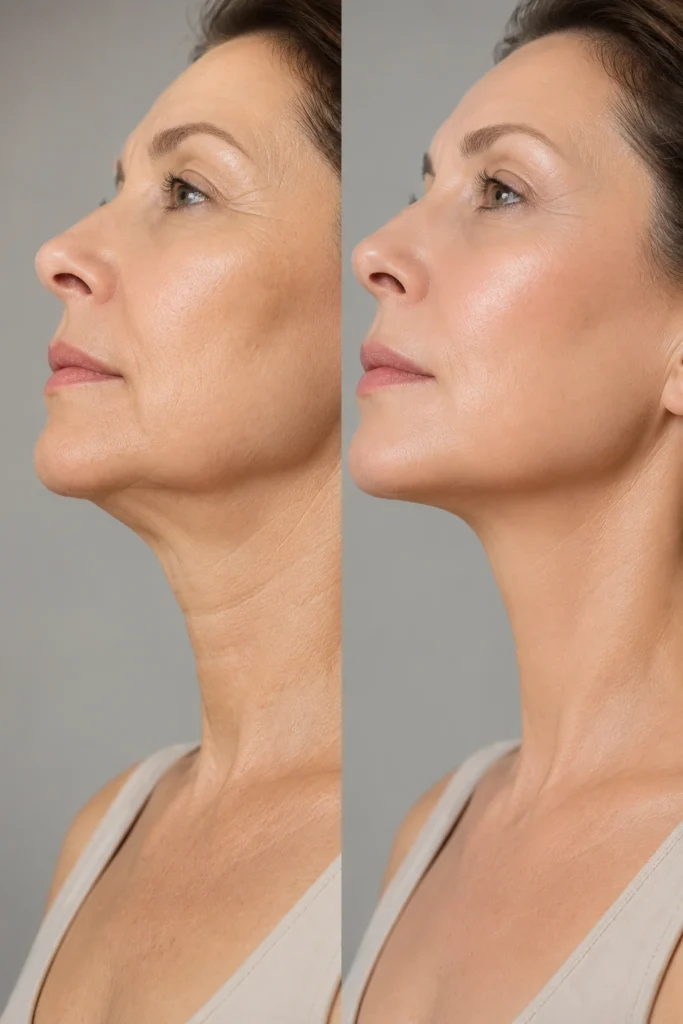
Neck Lift vs. Face Lift: Which Is More Effective? The answer depends on where the most noticeable signs of aging appear and what you want to improve. A neck lift focuses mainly on loose skin, excess fat, and reduced definition beneath the chin and along the neck, while a face lift targets sagging tissues across the lower and middle areas of the face. Neither procedure is universally more effective than the other; the right choice depends on facial anatomy, skin quality, aging patterns, and personal aesthetic goals.
Aging does not affect every part of the face at the same pace. Some people maintain relatively firm cheeks and jawlines but notice significant sagging under the chin or around the neck. Others experience jowls, flattened cheeks, deeper facial folds, and loose skin that extends from the face toward the neck. Understanding these differences makes it easier to compare the two procedures realistically.
Table of Contents
ToggleWhat Is a Neck Lift and What Does It Address?
A neck lift focuses on the area between the jawline and the upper chest. Over time, skin loses elasticity, fat can accumulate beneath the chin, and the neck muscles may become more visible. These changes can soften the angle between the jaw and neck and create an older appearance even when the upper face still looks youthful.
During neck lift surgery, the surgeon aims to improve the contour beneath the chin, redefine the jawline, and address loose skin. Depending on the person’s anatomy, the procedure may also involve managing excess fat or tightening deeper structures that influence neck definition.
People commonly consider a neck lift when they notice:
Loose or hanging skin beneath the chin
Reduced jawline definition
Excess fat under the chin
Vertical neck bands
A softer transition between the jaw and neck
Skin laxity concentrated mainly around the neck
Interest in Neck Lift in Turkey often comes from patients who want to target the lower facial profile without making significant changes to the cheeks or upper facial structures. A detailed consultation helps determine whether the neck itself causes the main concern or whether facial sagging also contributes to the appearance.
A neck lift does not aim to change a person’s natural facial characteristics. Instead, the procedure focuses on creating a cleaner transition between the face, jawline, and neck while maintaining proportions that suit the rest of the face.
What Is a Face Lift and Which Areas Can It Improve?
A face lift addresses age-related changes across a broader section of the face. Although people sometimes assume that a face lift treats every part of the face, modern procedures generally concentrate on the midface, lower face, jawline, and sometimes the upper neck.
With age, facial tissues gradually descend. The cheeks can lose their youthful position, folds beside the nose and mouth may appear deeper, and jowls can develop along the jaw. Skin laxity can make these changes more noticeable.
A face lift aims to reposition deeper facial tissues rather than simply pulling the skin tighter. This approach can create smoother contours while helping the face retain a natural appearance.
People may explore Face Lift in Turkey when several areas show noticeable aging at the same time. For example, someone may have jowls, loose lower-face skin, flattened cheeks, and mild neck laxity. In this situation, treating only the neck may leave facial aging patterns unchanged.
A face lift can commonly address:
Jowls along the jawline
Sagging in the lower cheeks
Loose skin around the lower face
Deepening folds around the mouth
Reduced facial definition
Mild to moderate neck laxity
The goal does not involve removing every line or changing facial identity. Instead, the surgeon works with the patient’s anatomy and existing facial proportions to create a refreshed appearance.
Neck Lift vs. Face Lift: Understanding the Main Differences
The clearest difference between these procedures lies in the treatment area.
A neck lift concentrates mainly below the jawline. A face lift addresses broader facial aging and often influences the jawline and upper neck as part of the overall improvement.
Someone with a smooth midface and firm cheeks but significant neck laxity may gain more relevant improvement from a neck-focused procedure. In contrast, someone with jowls, cheek descent, lower-face sagging, and neck looseness may require a wider approach.
Another important difference involves how the procedures influence facial balance.
The face and neck visually connect. If significant facial sagging contributes to a poorly defined jawline, treating the neck alone may not create the desired transition. Similarly, if the face remains youthful but the neck shows advanced skin laxity, a full face lift may address areas that do not require substantial correction.
This is why surgeons evaluate the face as a whole rather than focusing only on one visible concern.
When discussing Facial Surgeries in Turkey, patients often compare procedures by name or popularity. A more useful approach involves identifying which anatomical structures create the concern first. Procedure selection should follow that assessment rather than the other way around.
Which Procedure Creates a More Defined Jawline?
Both procedures can improve jawline definition, but they achieve this through different areas.
A neck lift can sharpen the jaw-neck transition by managing loose skin, fat, and deeper neck structures. This approach works particularly well when the main problem sits below the jaw.
A face lift can improve jawline definition by repositioning tissues that have descended from the cheeks and lower face. When jowls blur the jawline, facial lifting may contribute more significantly to the visible improvement.
Some patients have both problems at the same time. They may notice facial tissue dropping over the jawline while loose skin collects beneath it. In these cases, treating only one region can create an incomplete improvement.
A surgeon therefore examines where the loss of definition originates. Jawline appearance depends not only on skin but also on fat distribution, muscle structure, bone anatomy, tissue descent, and neck contour.
Can a Neck Lift and Face Lift Be Combined?
Yes. Surgeons often consider a combined approach when aging affects both the lower face and neck.
Because these regions connect anatomically, treating them together can create a smoother transition from the cheeks to the jawline and neck. A combined approach may suit people who have both noticeable jowls and loose neck skin.
However, combining procedures does not automatically make treatment better. Some patients only need targeted correction. Others benefit more from treating several connected areas.
The surgeon should evaluate:
Degree of facial skin laxity
Position of the cheeks and lower-face tissues
Jawline definition
Neck skin quality
Fat distribution beneath the chin
Muscle structure
Previous facial procedures
Overall facial proportions
People researching Neck Lift in Turkey may initially assume that neck surgery alone will fully redefine their lower-face contour. If jowls or facial tissue descent play a major role, however, the treatment plan may need to address those areas as well.
Which Procedure Looks More Natural?
Natural appearance depends more on surgical planning and technique than on whether someone chooses a neck lift or face lift.
A successful facial rejuvenation procedure should respect the person’s original facial features. Excessive tension or an approach that ignores deeper tissue positioning can produce an unnatural appearance.
Modern facial surgery generally focuses on repositioning and supporting tissues rather than simply stretching the skin. This philosophy helps maintain natural contours and facial movement.
A neck lift should create a balanced jaw-neck angle without making the neck look unnaturally tight. A face lift should refresh the lower and middle facial areas without changing the person’s identity.
Patients considering Face Lift in Turkey should therefore focus on individualized planning rather than chasing dramatic transformation. Facial rejuvenation often looks most harmonious when the changes match the patient’s anatomy and degree of aging.
How Does Age Affect the Choice Between Neck Lift and Face Lift?
There is no single ideal age for either procedure. Biological aging varies widely between individuals.
Genetics, sun exposure, smoking history, weight changes, skin thickness, facial bone structure, and lifestyle habits all influence how quickly the face and neck change.
A younger adult may develop early neck laxity because of genetics or major weight loss while maintaining good facial firmness. Another person of the same age may experience jowls and cheek descent but relatively little neck looseness.
For this reason, chronological age alone does not determine which procedure makes sense.
Surgeons usually pay more attention to anatomical changes and tissue quality. The question is not simply, “How old is the patient?” but rather, “Which structures are creating the visible signs of aging?”
Recovery Differences Between Neck Lift and Face Lift
Recovery varies according to the extent of surgery, individual healing response, and whether the surgeon combines additional procedures.
After either surgery, patients can experience swelling, tightness, bruising, and temporary changes in sensation. These effects generally improve gradually as healing progresses.
A neck-focused procedure may involve swelling around the jawline and beneath the chin. A face lift can cause swelling across a wider facial area because the procedure addresses more extensive tissues.
Patients should also remember that early appearance does not represent the final result. Facial tissues need time to settle, swelling needs to decrease, and incision areas need to mature.
People comparing Facial Surgeries in Turkey should include recovery planning in their decision rather than focusing only on the visible outcome. Work schedules, travel plans, daily responsibilities, and personal comfort during recovery all matter when deciding on timing.
How Long Can Neck Lift and Face Lift Results Last?
Both procedures aim to create long-term improvement, but they cannot stop biological aging.
After surgery, the face and neck continue to age naturally. Skin quality changes, tissues gradually shift, and lifestyle factors continue influencing appearance.
Several factors can affect how results evolve over time, including:
Genetics
Skin elasticity
Sun exposure
Smoking
Weight fluctuations
General health
Skincare habits
Age at the time of surgery
Maintaining a stable weight and protecting the skin from excessive sun exposure can support the appearance of the treated areas.
Rather than viewing surgery as a permanent freeze in time, it makes more sense to think of it as repositioning facial and neck structures from their current aged state.
Neck Lift or Face Lift: How Do You Choose?
The most useful starting point involves identifying exactly what you want to improve.
Stand in front of a mirror and observe the face and neck separately. Is loose skin mainly beneath the chin? Are there visible jowls? Have the cheeks descended? Does the jawline look soft because of the neck, the face, or both?
These questions help clarify whether the concern involves one isolated region or several connected areas.
If the neck creates the main concern while the face remains relatively firm, a neck lift may offer the more targeted approach. If aging affects the cheeks, jawline, lower face, and neck together, a face lift or combined treatment may better match the anatomy.
The most effective procedure is therefore not necessarily the larger procedure. It is the one that directly addresses the structures responsible for the changes the patient wants to improve.
Frequently Asked Questions
1. Is a neck lift better than a face lift for a double chin?
It depends on what causes the appearance. Excess fat, loose neck skin, muscle structure, and facial tissue position can all influence the area beneath the chin. A surgeon needs to identify the main cause before recommending a procedure.
2. Can a face lift tighten the neck too?
A face lift can improve parts of the jawline and upper neck, especially when facial tissue descent contributes to sagging. Significant neck laxity may require additional neck-focused techniques.
3. Can I have a neck lift without having a face lift?
Yes. People whose aging changes mainly affect the neck can undergo a neck-focused procedure without treating the entire face. The surgeon should first confirm that facial sagging does not significantly contribute to the concern.
4. Which procedure has a longer recovery period?
Recovery varies according to surgical extent and individual healing. A face lift often involves a broader treatment area, while a neck lift focuses on a more limited region. Combining procedures may also influence the overall recovery experience.
5. How do I know whether I need a neck lift, face lift, or both?
Look at where the aging changes occur. Neck laxity beneath an otherwise firm face may point toward a neck-focused procedure. Jowls, cheek descent, lower-face sagging, and neck looseness together may require a broader approach. A detailed facial assessment gives the clearest answer.