


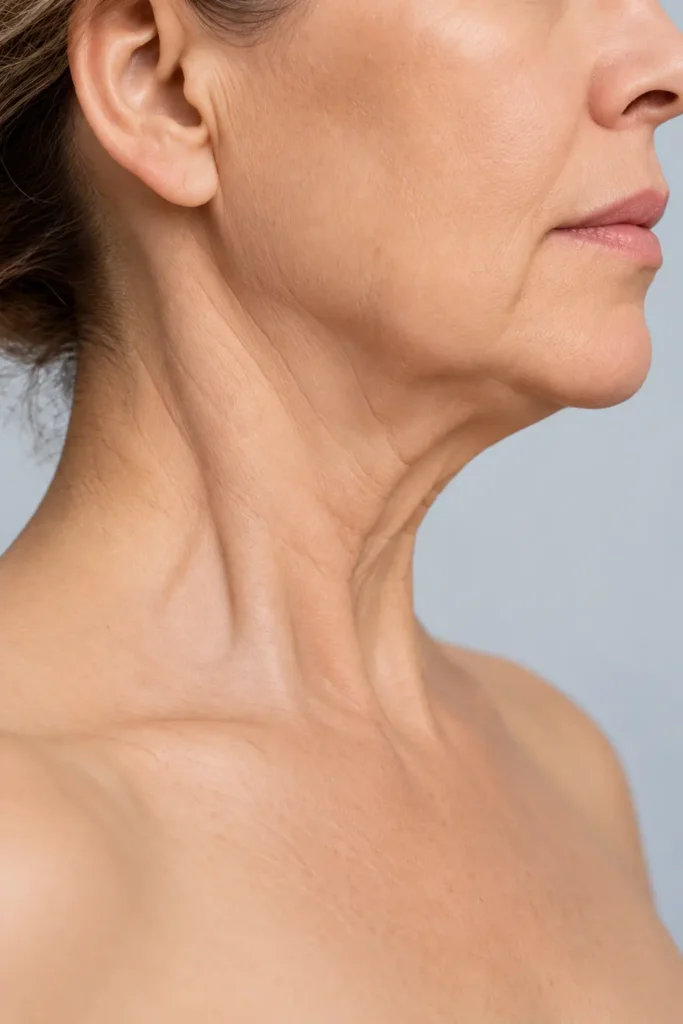
Neck Lift in Turkey: Can It Fix Sagging Skin? Yes, a neck lift can significantly improve sagging skin by removing excess tissue, tightening underlying neck muscles, and creating a smoother, more defined neckline. As the skin loses elasticity with age, many people notice loose folds, visible neck bands, and a less defined jawline. A neck lift addresses these concerns by targeting the structures responsible for an aging neck rather than simply tightening the skin’s surface. For patients considering Neck Lift in Istanbul, Turkey, understanding what the procedure can achieve, how long the improvements last, and who makes a suitable candidate helps set realistic expectations.
Table of Contents
ToggleWhat Causes Sagging Skin Around the Neck?
The neck often shows visible signs of aging earlier than other areas of the face. Its relatively thin skin, frequent movement, and exposure to environmental factors contribute to changes in texture and firmness.
Several factors influence how quickly the neck loses its youthful appearance.
Natural Aging and Collagen Loss
Collagen and elastin help maintain skin firmness and flexibility. As people age, their bodies gradually produce less collagen, while existing elastic fibers undergo structural changes.
These changes make it harder for the skin to return to its original position after stretching. Over time, loose skin develops beneath the chin and along the neck.
The underlying platysma muscle also changes with age. As its edges become more visible, vertical bands may appear along the front of the neck.
Weight Loss and Loose Neck Skin
Significant weight loss can leave excess skin around the neck, especially when the skin has lost much of its elasticity.
Although losing weight reduces fat deposits, it does not always restore skin firmness. Some people maintain a healthy weight yet continue to experience loose folds beneath the chin.
A neck lift can address this remaining skin laxity when non-surgical approaches cannot provide sufficient improvement.
Genetics and Lifestyle Factors
Genetics influence skin quality, fat distribution, and the natural shape of the jawline. Some people develop neck laxity earlier than others, even when they follow similar skincare routines.
Other contributing factors include:
Prolonged sun exposure and ultraviolet damage
Smoking and its effects on collagen production
Repeated weight fluctuations
Reduced skin elasticity
Changes in facial fat distribution
Natural differences in neck anatomy
Understanding the underlying cause of sagging helps surgeons determine which surgical techniques best suit each patient.
How Does a Neck Lift Fix Sagging Skin?
A neck lift, medically known as lower rhytidectomy or neck rejuvenation surgery, improves the appearance of loose neck skin and underlying tissues.
Unlike skincare products that mainly target the skin’s surface, surgery allows a plastic surgeon to address deeper anatomical structures.
The exact technique depends on the patient’s skin elasticity, muscle condition, fat distribution, and desired changes.
Removing Excess Neck Skin
When loose skin creates visible folds, a surgeon can remove excess tissue and reposition the remaining skin.
The surgeon typically places incisions around or behind the ears, sometimes extending into the hairline. The incision pattern varies according to the surgical plan.
By carefully redraping the skin, the surgeon creates a smoother neck contour without relying on excessive tension.
However, surgery does not completely eliminate natural skin texture, fine wrinkles, or every visible sign of aging.
Tightening the Platysma Muscle
The platysma is a thin muscle that extends across the front and sides of the neck.
With age, changes in this muscle can contribute to vertical neck bands and reduced definition beneath the jawline.
During a procedure called platysmaplasty, the surgeon adjusts and tightens the muscle when necessary.
This approach can improve:
Visible vertical neck bands
Muscle-related neck laxity
Definition beneath the chin
The transition between the jawline and neck
Not every patient requires platysma tightening. The surgeon selects the appropriate technique after examining the neck’s underlying anatomy.
Addressing Excess Fat Beneath the Chin
Some patients experience both loose skin and stubborn fat beneath the chin.
When appropriate, surgeons may combine neck lift surgery with carefully planned fat removal to improve the neck contour.
Liposuction can reduce localized fat deposits, but it cannot reliably correct substantial skin laxity on its own.
For patients with significant sagging, removing fat without addressing loose skin may leave the neck looking less firm.
A personalized surgical approach helps balance skin tightening, fat reduction, and natural neck proportions.
Can a Neck Lift Get Rid of Turkey Neck?
The term “turkey neck” describes loose, hanging skin or visible vertical bands around the neck. Many people use this expression when searching for ways to restore a firmer neckline.
A neck lift can substantially improve turkey neck when excess skin and changes in the platysma muscle cause the appearance.
However, the level of improvement depends on several factors, including skin quality, tissue laxity, and individual anatomy.
Patients with pronounced hanging skin may benefit from surgical skin removal, while those with prominent muscle bands may require additional platysma tightening.
A neck lift can create a smoother contour, but it cannot stop future aging or guarantee a completely wrinkle-free neck.
Does a Neck Lift Improve the Jawline Too?
Yes, a neck lift can improve the appearance of the jawline by reducing loose tissue beneath the chin and addressing sagging along the upper neck.
The jawline and neck share closely connected anatomical structures. Changes in one area often influence how the other appears.
When excess neck skin obscures the angle between the chin and neck, repositioning the tissues can create a more defined transition.
However, significant jowling or sagging in the lower face may require additional facial surgery.
Patients exploring Facial Surgeries in Istanbul, Turkey often compare neck lift and facelift procedures because both can address different aspects of lower facial aging.
The most appropriate approach depends on whether the primary concern involves the neck, jawline, lower face, or a combination of these areas.
Neck Lift vs. Non-Surgical Skin Tightening: Which Works Better?
Many people wonder whether they need surgery or whether non-surgical treatments can tighten their neck sufficiently.
The answer largely depends on the degree of skin laxity.
Non-surgical treatments may provide modest improvements in selected patients with mild skin looseness. However, they cannot remove substantial excess skin or reproduce the structural changes of a surgical neck lift.
Can Radiofrequency or Ultrasound Tighten Sagging Neck Skin?
Radiofrequency and ultrasound-based treatments deliver energy into targeted tissue layers to encourage collagen remodeling.
Some patients experience gradual improvements in skin firmness after treatment.
However, the degree of tightening varies, and these procedures generally offer more limited improvements than surgery.
People with significant hanging skin or pronounced neck bands should not expect energy-based treatments to provide the same changes as a neck lift.
Can Botox Fix Neck Bands?
Botulinum toxin injections can temporarily reduce the appearance of certain platysmal bands by relaxing targeted muscle activity.
This approach may suit selected patients with dynamic neck bands and relatively good skin elasticity.
However, Botox does not remove excess skin or correct substantial tissue sagging.
Its effects also fade over time, making repeat treatment necessary for patients who want to maintain the improvement.
When Does Surgery Become the Better Option?
A neck lift may offer a more suitable approach when:
Loose skin hangs visibly beneath the chin.
Vertical neck bands remain prominent at rest.
Excess tissue obscures the natural neck contour.
Non-surgical treatments have not provided sufficient improvement.
Skin laxity affects both the neck and jawline.
A qualified surgeon can assess whether surgical intervention matches the patient’s anatomy, health, and expectations.
What Is the Best Age for a Neck Lift?
There is no single ideal age for neck lift surgery.
Although many patients consider the procedure in their 40s, 50s, or 60s, age alone does not determine whether someone needs a neck lift.
Some individuals develop noticeable neck laxity earlier because of genetics or significant weight loss. Others maintain relatively firm neck skin well into later adulthood.
The more important factors include skin quality, overall health, the degree of sagging, and personal expectations.
Can You Get a Neck Lift in Your 30s?
A neck lift in your 30s is less common, but younger adults may consider surgery when they experience significant loose skin after weight loss or have anatomical concerns that non-surgical treatments cannot adequately address.
However, younger patients with localized fat beneath the chin and good skin elasticity may not need a full neck lift.
A surgeon should carefully distinguish between excess fat, loose skin, and underlying structural differences before recommending surgery.
Is 60 Too Old for a Neck Lift?
Being 60 or older does not automatically prevent someone from undergoing neck lift surgery.
Many patients in their 60s and beyond seek neck rejuvenation because of more noticeable skin laxity and muscle changes.
General health, medical history, medications, smoking status, and the ability to tolerate surgery matter more than chronological age alone.
A thorough medical evaluation helps determine whether surgery is appropriate.
What Happens During Neck Lift Surgery in Turkey?
Patients considering a neck lift often want to understand the surgical process before planning treatment abroad.
Although techniques vary, the procedure generally follows several stages.
Consultation and Surgical Planning
The process begins with a detailed consultation.
The surgeon examines the neck, jawline, skin elasticity, and underlying muscle structure. They also review the patient’s medical history, previous procedures, and expectations.
During this assessment, the surgeon determines whether the patient needs skin removal, muscle tightening, fat reduction, or a combination of techniques.
Choosing an experienced plastic surgeon in Turkey who can explain the procedure, limitations, and potential complications is an important part of surgical planning.
Anesthesia and Incision Placement
Surgeons commonly perform neck lift surgery under general anesthesia, although selected procedures may use local anesthesia with sedation.
The surgeon places incisions according to the amount of correction required.
Common incision locations include the natural creases around the ears, behind the ears, and occasionally beneath the chin.
The surgeon then adjusts the underlying tissues, addresses excess fat when appropriate, and removes loose skin.
The procedure often takes approximately two to four hours, although more extensive or combined surgeries may require additional time.
Immediately After Surgery
After surgery, patients usually experience temporary swelling, bruising, and tightness around the neck.
The surgical team may recommend a supportive garment to help manage swelling during early recovery.
Some patients also require temporary drains, depending on the surgical technique.
Before discharge, the medical team provides instructions covering wound care, medications, sleeping position, activity restrictions, and follow-up appointments.
Patients traveling internationally should arrange sufficient time for postoperative assessment before returning home.
How Long Does It Take to Recover From a Neck Lift?
Recovery varies according to the extent of surgery, individual healing, and whether the surgeon performs additional procedures.
Most patients notice the greatest swelling and bruising during the first several days.
Although the neck gradually looks more natural, deeper tissues continue healing for several weeks or months.
The First Week After Surgery
During the first week, patients commonly experience swelling, bruising, and a sensation of tightness.
The surgeon may recommend keeping the head elevated and avoiding activities that increase pressure around the surgical area.
Patients should follow their surgeon’s instructions regarding wound care, medication, and neck movement.
Short, gentle walks may support circulation, but strenuous physical activity should wait until the surgeon confirms that recovery has progressed sufficiently.
Weeks Two to Four
Many patients feel comfortable returning to desk-based work and light daily activities within approximately 10 to 14 days.
However, visible bruising and swelling may persist beyond this period.
The surgeon will determine when patients can resume exercise, lifting, and more demanding physical activities.
Recovery does not follow the same schedule for everyone, especially when a neck lift accompanies other facial procedures.
When Will the Neck Look Natural?
The neck often looks noticeably improved after the initial swelling decreases.
However, residual swelling, temporary firmness, and changes in skin sensation can continue for several months.
Scars also mature gradually.
Patients should expect their appearance to evolve throughout the healing process rather than judging the surgical changes during the first few weeks.
How Long Do Neck Lift Results Last?
A neck lift provides long-lasting structural improvements, but it does not permanently stop the aging process.
Many patients enjoy visible improvements for approximately 10 years or longer, although the duration varies considerably.
Genetics, skin quality, sun exposure, smoking, weight changes, and the surgical technique all influence how the neck ages after surgery.
The skin and underlying tissues continue changing naturally, but patients may retain a more defined neckline than they would have without surgery.
Can Sagging Skin Return After a Neck Lift?
Yes, some degree of skin laxity can develop again as the aging process continues.
However, this does not mean the original procedure has failed.
A neck lift removes existing excess skin and adjusts underlying tissues, creating a new starting point for future aging.
Maintaining a stable weight, protecting the skin from ultraviolet exposure, and avoiding smoking may help preserve skin quality.
Will a Neck Lift Leave Visible Scars?
Every surgical incision creates a scar.
However, surgeons generally position neck lift incisions around natural ear contours and within less noticeable areas whenever the anatomy and technique allow.
Scar visibility depends on incision placement, skin characteristics, healing, and individual scar formation.
Although scars often become less noticeable over time, they do not disappear completely.
Patients should discuss scar placement and healing expectations during their consultation.
What Are the Risks of Neck Lift Surgery?
Like any surgical procedure, a neck lift involves potential complications.
Understanding these risks helps patients make informed decisions and recognize symptoms that require medical attention.
Possible complications include:
Bleeding or hematoma formation
Infection
Temporary or persistent changes in skin sensation
Delayed wound healing
Unfavorable scarring
Skin irregularities or asymmetry
Nerve injury affecting facial or neck movement
Anesthesia-related complications
Dissatisfaction with the aesthetic appearance
Smoking, certain medical conditions, and medications can increase surgical risks.
Patients should provide a complete medical history and follow all preoperative and postoperative instructions.
Severe or rapidly increasing swelling, significant bleeding, fever, breathing difficulties, or sudden changes in facial movement require prompt medical assessment.
Is Neck Lift Surgery in Turkey Worth Considering?
Turkey attracts international patients seeking facial aesthetic procedures, including neck rejuvenation surgery.
However, choosing a surgical destination involves more than comparing treatment prices or looking at before-and-after photographs.
Patients should evaluate the surgeon’s qualifications, the medical facility, postoperative care arrangements, and the availability of follow-up support.
What Should International Patients Check Before Booking?
Before scheduling surgery, patients should ask about the surgeon’s training, relevant experience, and approach to neck rejuvenation.
They should also understand what the proposed treatment includes and whether additional procedures are necessary.
Important questions include:
What neck lift technique suits my anatomy?
Will the procedure address my skin, muscles, or both?
Where will the surgeon place the incisions?
What complications should I understand before surgery?
How long should I remain in Turkey after the procedure?
Who will provide care if a complication develops after I return home?
A transparent consultation should address both the expected improvements and the limitations of surgery.
How Can Patients Maintain a Natural-Looking Neck?
Natural-looking neck rejuvenation depends on appropriate surgical planning rather than aggressive skin tightening.
The surgeon must consider the relationship between the chin, jawline, neck muscles, and surrounding tissues.
Removing too much skin or applying excessive tension can create an unnatural appearance or increase healing difficulties.
A carefully planned neck lift aims to improve definition while preserving the patient’s individual facial characteristics.
For patients who experience substantial sagging, realistic expectations and a personalized surgical approach are essential.
Frequently Asked Questions About Neck Lift in Turkey
1. Can a Neck Lift Completely Remove Sagging Skin?
A neck lift can remove substantial excess skin and significantly improve the appearance of a sagging neck. However, the degree of correction depends on skin quality, muscle structure, and individual anatomy. Surgery cannot eliminate every wrinkle or prevent future skin aging. A consultation helps establish realistic expectations for the level of improvement.
2. Is a Neck Lift Better Than Liposuction for a Double Chin?
The better option depends on what causes the double chin. Liposuction targets excess fat and generally works best when the skin has enough elasticity to contract after fat removal. A neck lift addresses loose skin and underlying tissue laxity. Patients with both excess fat and significant sagging may benefit from a combined surgical approach.
3. Can a Neck Lift Fix Vertical Neck Bands?
Yes, a neck lift that includes platysma muscle tightening can improve visible vertical neck bands. The surgeon adjusts the underlying muscle to create a smoother contour. However, the technique and degree of improvement depend on the patient’s muscle anatomy and skin condition. Some patients with mild dynamic bands may also consider non-surgical treatment.
4. How Long Should I Stay in Turkey After a Neck Lift?
The appropriate stay depends on the surgical technique, healing progress, and postoperative care requirements. International patients often plan approximately 7 to 14 days, but some need a longer recovery period before traveling. The surgeon should confirm when flying is appropriate after examining the patient and assessing the risk of complications.
5. Can a Neck Lift Make You Look Younger Without Changing Your Face?
A neck lift can create a more youthful appearance by improving sagging skin, neck bands, and definition beneath the jawline. When the primary signs of aging affect the neck, surgery may create a noticeable improvement without directly changing the upper face. However, patients with significant lower facial sagging may need additional procedures to achieve balanced rejuvenation. The goal is a natural-looking neckline that complements the patient’s existing facial features.