


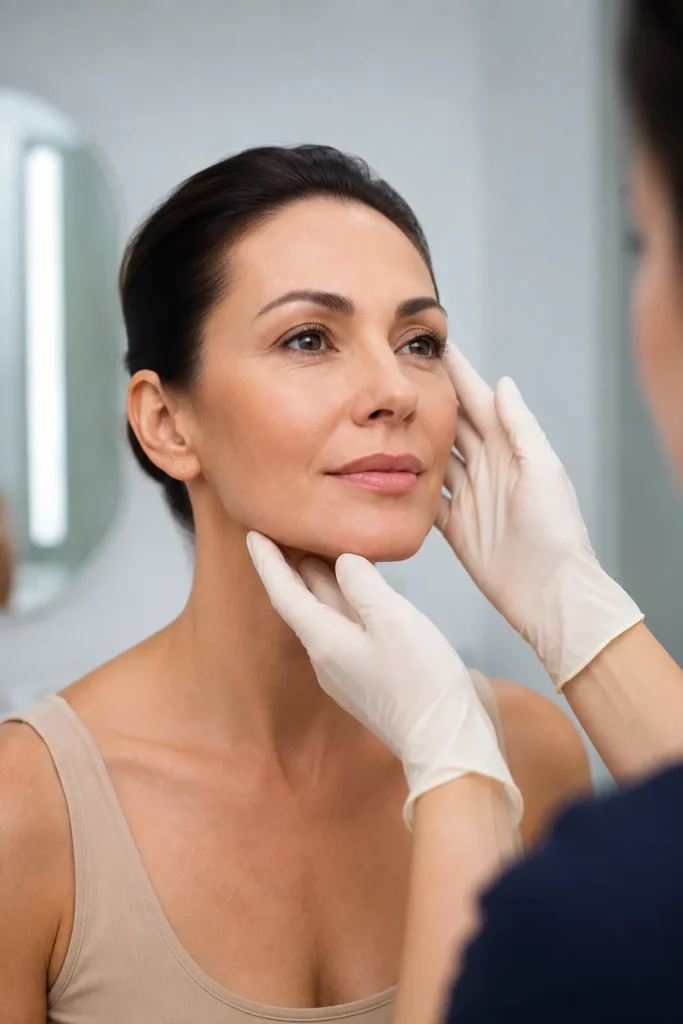
MACS Face Lift in Turkey: Who Is a Good Candidate? The ideal candidate is generally someone who has mild to moderate sagging around the cheeks, jawline, and lower face but does not yet need the more extensive correction associated with a traditional facelift. Good candidates also have realistic expectations, good general health, and enough skin elasticity to support a natural-looking lift. Age alone does not determine suitability; facial anatomy, skin quality, the degree of tissue laxity, lifestyle, and personal goals matter much more. A consultation with an experienced plastic surgeon remains the best way to understand whether a MACS lift matches your facial structure and expectations.
Facial ageing develops differently for every person. Genetics, sun exposure, changes in facial volume, smoking, skin quality, and the natural effects of time can all influence how early the cheeks and jawline begin to lose definition. Some people notice these changes relatively early, while others maintain firm facial contours for much longer.
For patients who want to address early or moderate facial sagging without choosing a more extensive facelift technique, a MACS lift can offer an alternative worth discussing with a plastic surgeon.
Table of Contents
ToggleWhat Is a MACS Face Lift?
MACS stands for Minimal Access Cranial Suspension. The MACS facelift technique focuses primarily on lifting the sagging tissues of the lower and middle areas of the face through relatively limited surgical access.
Rather than relying only on tightening loose skin, the procedure aims to reposition deeper facial tissues upward. This approach can improve the appearance of the cheeks, jawline, and lower face while helping the surgeon preserve natural facial proportions.
The exact surgical plan can vary according to facial anatomy and the surgeon’s technique. Some patients may require additional procedures when ageing affects several areas of the face. For example, a surgeon may discuss eyelid surgery, a neck procedure, fat transfer, or another complementary treatment when appropriate.
A facelift primarily targets structural changes such as sagging cheeks, loose tissue around the jawline, and facial folds associated with ageing. It does not work like a resurfacing procedure for fine skin texture, pigmentation, or every type of wrinkle.
Patients researching a MACS Face Lift in Turkey should therefore focus less on the name of the technique and more on whether the procedure addresses their individual ageing pattern.
Signs That You May Be a Good Candidate for a MACS Lift
The ideal MACS lift patient usually shows noticeable facial ageing but still retains reasonable skin elasticity and does not have very advanced tissue laxity.
One of the most common signs involves a loss of jawline definition. As facial tissues descend, the transition between the face and neck can appear less sharp. Small jowls may also develop around the sides of the chin.
Another common concern involves the cheeks. Youthful cheeks usually sit higher on the face, but ageing can gradually shift facial tissues downward. This movement can create a heavier appearance in the lower face.
A MACS lift may suit people who notice:
Mild to moderate jowling
Reduced definition along the jawline
Early or moderate cheek sagging
Lower facial heaviness
Facial tissues that appear to have moved downward
Loose skin that does not yet require extensive removal
A tired facial appearance despite feeling healthy and energetic
These features do not automatically make someone suitable for surgery. A plastic surgeon needs to examine skin elasticity, bone structure, facial volume, neck anatomy, medical history, and the degree of tissue descent before recommending a technique.
There Is No Single “Best Age” for a MACS Face Lift
Patients frequently associate facelift surgery with a particular age range. In reality, facial anatomy gives surgeons more useful information than a number on a birth certificate.
Two people of the same age can have completely different facial structures. One person may develop jowls and cheek laxity relatively early because of genetics or skin characteristics, while another may show only minor changes many years later.
The American Society of Plastic Surgeons also notes that there is no universally correct age for facelift surgery. Anatomy, genetics, lifestyle, and the individual ageing process all influence when a patient may benefit from treatment.
This makes personalised assessment particularly important.
A patient in their 40s with noticeable lower-face laxity may have a stronger anatomical reason to consider surgery than an older patient whose facial tissues remain relatively firm. Conversely, someone with advanced neck and facial sagging may need a more comprehensive approach rather than a limited-access technique.
When considering a Face Lift in Turkey, patients should therefore avoid choosing a procedure purely because it seems popular for their age group.
Skin Elasticity Matters
Skin quality plays an important role in facelift planning.
A MACS lift repositions facial tissues, but the skin still needs to adapt to the newly supported facial contours. Patients with relatively good skin elasticity often have anatomy that suits a limited lifting approach better than patients with extensive loose skin.
However, skin quality does not depend solely on age.
Long-term sun exposure, smoking, major weight fluctuations, genetics, and lifestyle can all influence elasticity. The natural ageing process also changes the distribution of facial fat and reduces the skin’s ability to return to its previous position after stretching.
During a consultation, the surgeon examines more than wrinkles. They look at the relationship between the skin, fat compartments, deeper supporting tissues, jawline, cheeks, and neck.
This assessment helps determine whether a MACS lift can create enough improvement or whether another facelift technique would provide better structural correction.
Good General Health Is an Important Part of Candidacy
A facelift is still surgery, even when surgeons use a more limited-access technique.
Patients should enter surgery in appropriate general health and discuss their full medical history with their surgeon. Certain medical conditions, medications, previous operations, or lifestyle factors can change the surgical plan or increase risk.
Smoking and nicotine use deserve particular attention because nicotine can interfere with blood flow and wound healing. Plastic surgery guidance consistently identifies smoking as an important surgical risk factor, and surgeons commonly require patients to stop nicotine use around elective procedures.
Patients should tell their surgeon about cigarettes, e-cigarettes, nicotine products, prescription medication, supplements, allergies, previous facial treatments, and past operations.
Trying to hide medical information does not make surgery easier. Complete information allows the surgical team to assess risk and plan the procedure more safely.
Realistic Expectations Make Someone a Better Candidate
A successful facelift consultation is not only about anatomy.
A good candidate understands what the procedure can and cannot change.
A MACS lift can improve sagging and restore clearer facial contours, but it cannot stop the ageing process. It also cannot transform a person’s facial anatomy into someone else’s appearance.
The strongest aesthetic goals usually sound more like:
“I want my jawline to look better defined.”
“My lower face looks heavier than it used to.”
“My face looks more tired even when I feel rested.”
“I want a fresher version of my own appearance.”
These goals give the surgeon something realistic to work with.
Very specific expectations about looking decades younger, achieving perfect symmetry, or copying another person’s face can create a mismatch between what surgery can deliver and what the patient expects.
A positive outlook and clear, realistic goals form an important part of candidacy for cosmetic surgery.
Who May Need a Traditional Facelift Instead?
A MACS lift does not suit every degree of facial ageing.
Patients with extensive skin laxity, significant neck sagging, pronounced jowls, or more advanced tissue descent may need a broader facelift approach. A traditional facelift can allow the surgeon to address larger areas and perform more extensive tissue repositioning when necessary.
This does not mean that one technique is automatically “better.”
The better procedure is the one that matches the patient’s anatomy.
Choosing a smaller operation when facial ageing requires more extensive correction can leave the patient dissatisfied. At the same time, selecting an unnecessarily extensive procedure for relatively mild ageing may not match the patient’s needs.
This distinction makes the physical examination one of the most important parts of facelift planning.
Patients comparing a MACS Face Lift in Turkey with a traditional procedure should ask their surgeon exactly which facial areas each technique would address in their individual case.
MACS Lift and Neck Ageing
Another important issue involves the neck.
Some people experience facial sagging without major neck laxity. Their jawline begins to soften and small jowls appear, yet the neck remains relatively defined. This type of ageing pattern can make a limited facelift approach more relevant.
Other patients develop significant loose neck skin, prominent neck bands, or excess tissue below the chin alongside facial ageing.
In these cases, improving only the lower face may not create balanced rejuvenation. Facelift surgery and neck procedures often overlap because the lower face and neck form a continuous anatomical area. Mayo Clinic notes that patients frequently undergo a neck lift alongside facelift surgery when neck sagging or excess fat requires treatment.
A surgeon therefore needs to examine the face and neck together rather than evaluating the jawline in isolation.
Previous Facial Treatments Do Not Automatically Rule Out Surgery
Many patients who consider facelift surgery have already tried injectable or non-surgical treatments.
Botulinum toxin, dermal fillers, energy-based devices, skin treatments, and other aesthetic procedures can address specific concerns, but they do not all treat the same anatomical problems.
Injectables may restore volume or soften particular lines. Skin treatments may improve texture or pigmentation. A facelift, by contrast, primarily addresses tissue descent and structural sagging.
Patients should tell their surgeon about every previous facial treatment, including the type of product used, treatment area, approximate date, and any complications.
This information helps the surgeon understand the current facial anatomy and build an appropriate surgical plan.
Stable Weight Can Help Maintain Facial Proportions
Major changes in body weight can also change facial volume.
Significant weight loss may reduce facial fullness and increase the appearance of loose skin. Weight gain can alter facial contours in the opposite direction. For this reason, patients who expect major weight changes may want to discuss timing carefully with their surgeon.
A relatively stable lifestyle allows the surgeon to assess facial proportions more accurately.
This consideration becomes especially relevant for patients who recently experienced significant weight loss and now notice loose skin around the cheeks, jawline, or neck.
Depending on the degree of laxity, these patients may need a different surgical approach than someone whose facial ageing developed gradually.
Why Patients Consider MACS Face Lift in Turkey
Turkey has become a destination where international patients frequently research facial aesthetic surgery. People may compare surgical techniques, clinic experience, surgeon qualifications, travel arrangements, recovery plans, and overall treatment logistics before making a decision.
Cost should never act as the only deciding factor.
Patients exploring Facial Surgeries in Turkey should pay close attention to the surgeon’s qualifications, experience with the specific procedure, hospital or surgical facility standards, preoperative evaluation, aftercare process, and communication after returning home.
The American Society of Plastic Surgeons encourages patients considering cosmetic surgery to research surgical risks and choose appropriately qualified plastic surgeons.
International patients also need to think about recovery before booking flights. Surgery, postoperative checks, swelling, bruising, wound care, and travel all require practical planning.
What Happens During a MACS Lift Consultation?
A good consultation should feel like a medical assessment rather than a sales conversation.
The surgeon begins by discussing what bothers the patient about their appearance. They then examine the face from different angles and evaluate the skin, cheeks, jawline, neck, facial volume, bone structure, and degree of tissue laxity.
The conversation should also cover medical history, previous surgery, medications, allergies, smoking or nicotine use, previous aesthetic treatments, and expectations.
Patients can use the consultation to ask several important questions:
Why do you recommend a MACS lift for my face?
Which areas will the procedure improve?
Which areas will it not change?
Would a traditional facelift suit my anatomy better?
Do I need a separate neck procedure?
Where will the incisions sit?
What type of scars should I expect?
What does recovery typically involve?
What are the main risks in my individual case?
How long should I stay in Turkey after surgery?
The surgeon should explain both the advantages and limitations of the proposed plan.
A personalised consultation also gives patients the opportunity to decide whether they feel comfortable with the surgeon’s aesthetic approach and communication style.
Natural-Looking Results Depend on the Right Surgical Plan
Many people interested in facelift surgery worry about looking overly tight or noticeably “operated on.”
Modern facial rejuvenation does not simply involve pulling the skin as tightly as possible. Facial ageing affects multiple layers, including skin, fat, deeper tissues, and supportive structures.
The aim of an appropriate surgical plan is therefore to reposition tissues in a way that respects the patient’s natural facial anatomy.
For the right candidate, a MACS lift can provide meaningful improvement in the lower and middle face while maintaining familiar facial characteristics. For another patient, a different facelift technique may create a more balanced improvement.
The key question is not whether MACS lift surgery is generally effective. The more useful question is whether your anatomy, ageing pattern, health, and expectations match what the technique can realistically achieve.
Frequently Asked Questions
1. What age is best for a MACS Face Lift?
There is no fixed age for a MACS lift. Facial anatomy, skin elasticity, tissue laxity, genetics, and personal goals matter more than chronological age. Some people develop suitable facial changes earlier than others.
2. Is a MACS lift suitable for severe facial sagging?
Patients with extensive loose skin, major neck laxity, or advanced facial tissue descent may need a more comprehensive facelift technique. A physical examination allows the surgeon to determine whether a limited approach can provide enough correction.
3. Can a MACS lift improve jowls?
A MACS lift can target lower-face tissue descent and may improve mild to moderate jowling and loss of jawline definition. The amount of improvement depends on skin quality, facial anatomy, and the degree of sagging.
4. Can I combine a MACS lift with other facial procedures?
Some patients combine facelift surgery with procedures such as eyelid surgery, neck surgery, fat transfer, or other facial treatments. The surgeon should decide whether combining procedures suits the patient’s anatomy, health, and aesthetic goals.
5. How do I know whether I need a MACS lift or a traditional facelift?
The main difference comes down to the extent and location of facial ageing. Patients with mild to moderate lower and mid-face laxity may suit a limited approach, while extensive sagging can require broader correction. An in-person examination gives the surgeon the clearest way to recommend the appropriate technique.