


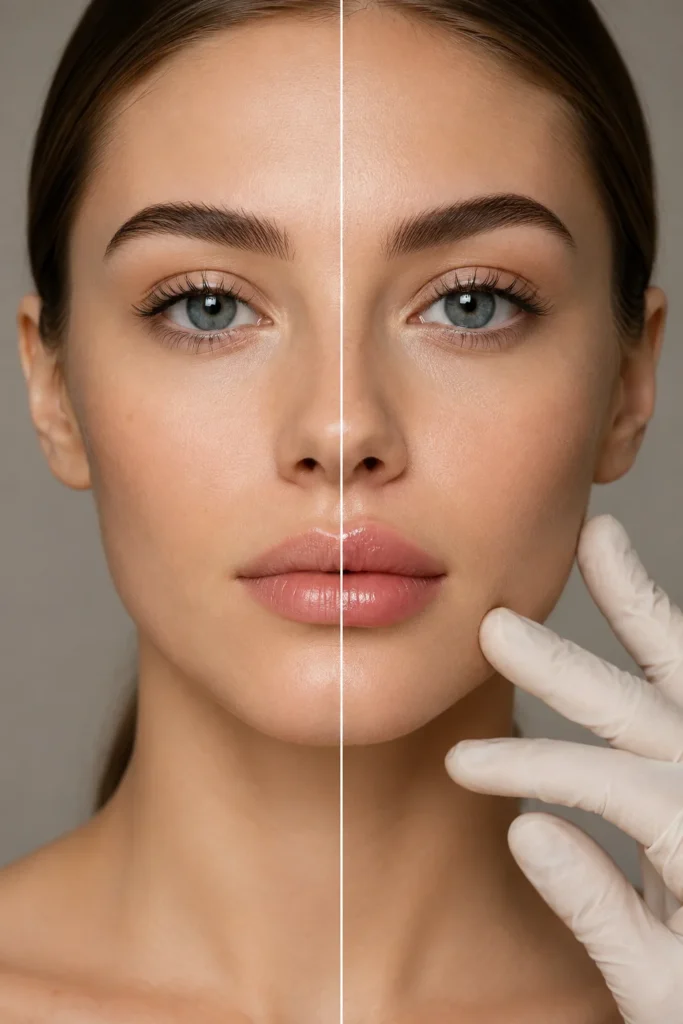
Lip Lift vs. Upper Lip Filler: Which Option Looks More Natural? The most natural-looking option depends on the shape of your lips, the distance between your nose and upper lip, your facial proportions, and the type of change yo
u want. A lip lift often creates a subtle and permanent improvement by shortening the skin above the upper lip and revealing more of the natural pink lip tissue. Upper lip filler, on the other hand, adds temporary volume and allows the practitioner to adjust the shape gradually. Neither option automatically looks more natural for everyone, so the best choice comes from matching the treatment to your existing anatomy rather than following a general trend.
Lip enhancement has moved far beyond the goal of simply creating fuller lips. Many people now want better definition, balanced proportions, a softer upper-lip curve, or a more visible smile without an exaggerated appearance. Both a lip lift and upper lip filler can support these goals, but they achieve them in very different ways.
Understanding those differences can help you make a more informed decision and communicate your expectations clearly during a consultation.
Table of Contents
ToggleWhat Is a Lip Lift and How Does It Change the Upper Lip?
A lip lift is a surgical procedure that shortens the distance between the base of the nose and the upper lip. Surgeons commonly call this area the philtrum. During the procedure, the surgeon removes a carefully measured strip of skin from beneath the nose and lifts the upper lip into a slightly higher position.
This change exposes more of the pink part of the upper lip without adding artificial volume. It can also improve the shape of the Cupid’s bow and increase the visibility of the upper teeth when the mouth rests or smiles.
The procedure often suits people who have a long space between the nose and upper lip or an upper lip that turns inward. In these cases, adding filler alone may increase projection without correcting the underlying proportion. A lip lift addresses the position of the lip itself, which can create a more harmonious relationship between the nose, mouth, and chin.
People researching Lip Lift in Turkey often focus on the procedure’s long-lasting nature and its ability to improve lip visibility without creating an overly filled appearance. However, the outcome still depends heavily on precise planning, suitable anatomy, scar placement, and the surgeon’s understanding of facial proportions.
A lip lift creates a permanent structural change. The tissues still age naturally over time, but the shortened distance does not simply return to its original length after a few months.
How Does Upper Lip Filler Work?
Upper lip filler usually involves injecting a hyaluronic acid-based product into selected areas of the lip. The practitioner can add volume, improve border definition, enhance the Cupid’s bow, correct mild asymmetry, or support the lip corners.
Unlike a lip lift, filler does not remove skin or permanently reposition the upper lip. It works by adding shape and volume within or around the lip tissue. This makes the treatment flexible and adjustable.
A practitioner can use a small amount for a subtle change or build volume gradually across more than one appointment. This step-by-step approach appeals to people who feel unsure about making a permanent change.
The effects of filler gradually fade as the body breaks down the injected material. The duration varies depending on the product, injection technique, metabolism, lip movement, and individual anatomy. Many people require maintenance treatments if they want to preserve the appearance.
Interest in upper lip filler in Turkey often comes from people who want a less invasive treatment, a shorter recovery period, or a temporary way to explore a new lip shape. A careful practitioner will avoid treating every lip with the same injection pattern and will consider the entire facial profile before adding volume.
Filler can look very natural when the treatment respects the lip’s original structure. Problems usually arise when the injector uses too much product, places it poorly, repeats treatments too frequently, or tries to correct an anatomical issue that filler cannot properly address.
Lip Lift vs. Upper Lip Filler: Key Differences
Although both treatments enhance the upper lip, they solve different concerns.
A lip lift changes the vertical position of the upper lip. It shortens the philtrum, increases pink lip show, and may reveal more of the upper teeth. Filler changes the lip’s volume, projection, contour, and definition.
A lip lift requires surgery, incisions, healing, and a permanent commitment. Filler requires injections, causes temporary swelling, and gradually dissolves over time.
The most important differences include:
Purpose: A lip lift improves position and proportion, while filler improves volume and shape.
Longevity: A lip lift creates a permanent change, while filler requires maintenance.
Recovery: Surgery involves a longer healing process than injections.
Scarring: A lip lift leaves a scar beneath the nose, while filler does not create a surgical scar.
Adjustability: Practitioners can add or dissolve many hyaluronic acid fillers, while surgeons cannot easily reverse a lip lift.
Effect on lip length: A lip lift shortens the space above the lip, while filler does not.
Effect on projection: Filler can project the lip forward, while a lip lift mainly rotates and elevates the upper lip.
These differences explain why the two options do not always compete with each other. In selected cases, a person may benefit from a lip lift first and a very small amount of filler later. The surgeon or injector should recommend this combination only when each treatment serves a separate and clear purpose.
Which Option Usually Looks More Natural?
Natural-looking results come from proportion, restraint, and appropriate treatment selection. The procedure name matters less than whether the treatment matches your anatomy.
A lip lift may look more natural when the upper lip appears thin because it rolls inward or sits too far below the nose. Instead of adding extra material, the surgery reveals more of the person’s own lip tissue. This can create a balanced appearance from both the front and side views.
Upper lip filler may look more natural when the philtrum already has a balanced length but the lips lack definition, mild volume, or symmetry. A conservative amount can soften the lip border, support the Cupid’s bow, or create more balance between the upper and lower lips.
Filler may look less natural when too much volume makes the upper lip project excessively. This can create heaviness, reduce normal lip movement, blur the lip border, or produce a shelf-like profile. Repeated injections can also cause product migration in some cases.
A lip lift may look less natural when the surgeon shortens the philtrum too aggressively or creates excessive tooth show. Poor scar placement or uneven lifting can also affect the final appearance. For this reason, careful measurements and conservative planning play a major role.
Facial balance should guide every decision. A fuller lip does not always improve the face, and a shorter philtrum does not suit every patient. The most natural approach preserves your individual features rather than trying to copy another person’s lip shape.
Who May Be a Better Candidate for a Lip Lift?
A lip lift may suit people who have a visibly long philtrum, limited upper-tooth show, or an upper lip that appears hidden even when it has enough natural tissue. It can also appeal to people who want a lasting change and no longer want repeated filler appointments.
You may consider a lip lift when:
The distance between your nose and upper lip appears long
Your upper lip turns inward
Filler adds projection but does not reveal enough pink lip
You want a permanent structural improvement
Your facial proportions support a shorter philtrum
You understand and accept the possibility of a visible scar during healing
A good candidate also needs realistic expectations. A lip lift enhances the existing lip; it does not create an entirely different mouth. It also cannot correct every type of asymmetry or replace procedures that address the lower face, jaw, or dental structure.
During consultations for Lip Lift in Turkey, patients should ask how the surgeon measures the planned skin removal, where the scar will sit, how the procedure may affect tooth show, and how the proposed change fits the full facial profile.
Who May Prefer Upper Lip Filler?
Upper lip filler may suit people who want a temporary, adjustable, and minimally invasive enhancement. It often works well for mild volume loss, small asymmetries, reduced border definition, or a Cupid’s bow that needs subtle support.
You may prefer filler when:
Your philtrum already has a balanced length
You want more lip volume rather than a higher lip position
You prefer a temporary treatment
You want to make gradual changes
You do not want surgery or a permanent scar
You need mild shape correction rather than structural repositioning
Filler can also help people understand how they feel about a more defined or fuller upper lip before considering a longer-lasting option. However, filler cannot accurately simulate every aspect of a lip lift because it adds material rather than shortening skin.
When exploring upper lip filler in Turkey, patients should look beyond the amount of product used. Injector experience, knowledge of facial anatomy, product selection, hygiene standards, and a conservative treatment plan all influence the result.
Recovery and Healing Differences
A lip lift requires more recovery than upper lip filler. Swelling, tightness, bruising, and temporary changes in the smile can occur after surgery. The incision beneath the nose needs time to heal, and the scar usually changes in appearance over several months.
Patients often need to adjust facial movements and follow wound-care instructions during the early healing period. The final lip position may not appear immediately because swelling can temporarily distort the shape.
Filler recovery usually feels more manageable. Swelling, tenderness, firmness, and bruising can develop around the injection sites. These effects often improve gradually, but the lips may look larger or less even during the first few days.
People should avoid judging filler results too early. Initial swelling can make the lips appear more dramatic than the settled outcome.
Both treatments carry risks. Lip lift risks include infection, noticeable scarring, asymmetry, altered sensation, wound-healing problems, and dissatisfaction with the amount of lift. Filler risks include infection, lumps, migration, asymmetry, prolonged swelling, and vascular complications.
A qualified medical professional should explain the risks, recovery process, and warning signs before treatment.
Can a Lip Lift and Filler Be Combined?
Some patients benefit from combining the two treatments, but the combination requires restraint. A lip lift can improve the position and visibility of the upper lip, while a small amount of filler can later refine contour, hydration, or symmetry.
The practitioner should allow the lip lift to heal before assessing whether filler adds meaningful value. Treating the lips too soon can make it difficult to distinguish swelling from the final surgical shape.
Combination treatment does not mean using the maximum amount of both options. The goal should remain facial balance. Once the lip lift reveals more pink lip tissue, the patient may need much less filler than expected.
This combined approach may form part of broader Facial Surgeries in Turkey planning when a patient also considers procedures that affect the nose, chin, cheeks, or overall facial profile. Coordinating treatments can help prevent one feature from looking disconnected from the rest of the face.
How to Choose the Right Treatment for Your Face
Start by identifying what you actually want to change. Do you want more volume, a shorter distance beneath the nose, improved tooth show, stronger lip borders, or better symmetry? Each concern points toward a different treatment strategy.
Examine your lips from the front, side, and during a natural smile. A treatment that looks attractive in a still photograph may affect facial movement differently. Your practitioner should evaluate your resting expression, lip mobility, dental show, nose shape, chin projection, and lower-face proportions.
Ask the following questions during your consultation:
Is my concern mainly related to lip volume or lip position?
Is my philtrum genuinely long for my facial proportions?
Would filler make my upper lip project too far forward?
How much tooth show would a lip lift create?
Where would the surgical scar sit?
What changes should I expect when smiling?
Can the treatment maintain balance between my upper and lower lips?
How many similar cases has the practitioner treated?
Avoid choosing a procedure based only on social media images. Lighting, facial expression, makeup, editing, and camera angles can change how lips appear. Before-and-after photographs provide more useful information when they show consistent angles, neutral expressions, and healed results.
People considering several Facial Surgeries in Turkey should also discuss the order of procedures. A rhinoplasty, chin procedure, facelift, or dental treatment may change the way the lips appear within the face, so coordinated planning often creates a more coherent outcome.
Frequently Asked Questions
1. Does a lip lift look more natural than filler?
A lip lift can look more natural for someone with a long philtrum or an upper lip that rolls inward because it reveals the person’s own lip tissue. Filler may look more natural for someone who already has balanced proportions but wants mild volume or definition. Treatment selection matters more than choosing one method for everyone.
2. Can upper lip filler shorten the distance between the nose and lip?
Filler cannot physically shorten the philtrum. Strategic placement may create the visual impression of a more visible upper lip, but adding too much product can increase projection instead of improving vertical proportions. A lip lift directly changes the distance by removing a measured amount of skin.
3. Is a lip lift permanent?
A lip lift creates a permanent structural change by shortening the skin between the nose and upper lip. Natural ageing still continues, and facial tissues may gradually change over time. The procedure does not require routine maintenance in the same way as filler.
4. Will a lip lift leave a visible scar?
A lip lift creates a scar beneath the base of the nose. Surgeons place the incision within natural creases to make it less noticeable, but scar quality varies between individuals. Genetics, skin type, surgical technique, wound care, sun exposure, and healing patterns can influence the final appearance.
5. Can I have filler after a lip lift?
Some patients receive a small amount of filler after the lip lift has fully healed. Filler may refine definition, correct mild asymmetry, or add subtle volume. The surgeon or injector should first assess the settled surgical result and confirm that filler will improve the lip without creating excess projection.