


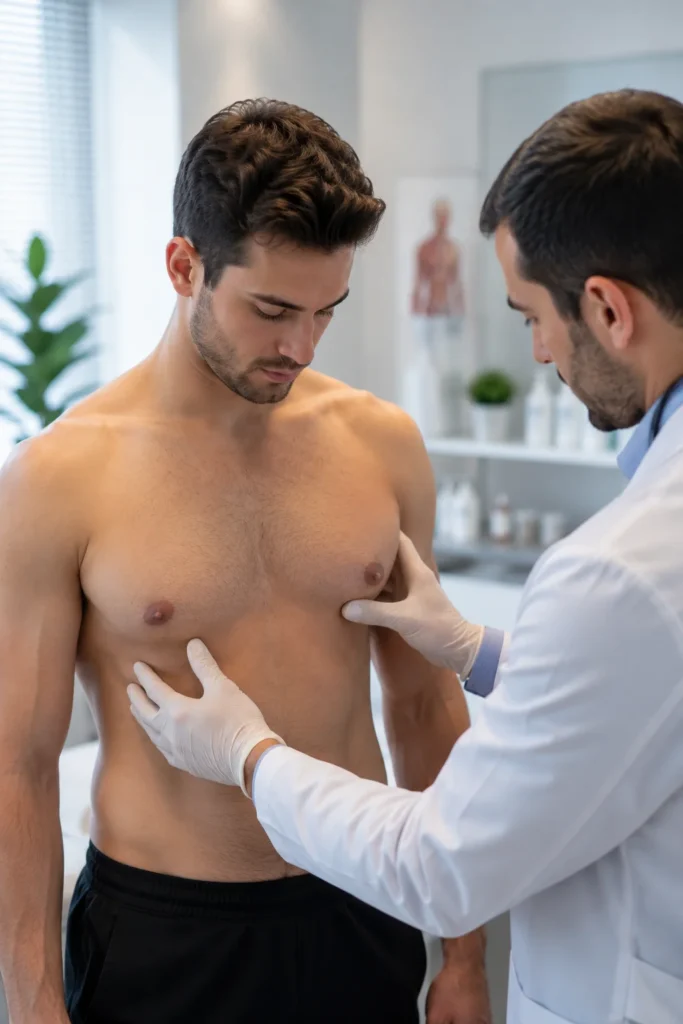
Gynecomastia in Turkey: Who Is a Good Candidate? The best candidates are generally men who have persistent excess breast tissue, feel uncomfortable with the appearance of their chest, maintain a relatively stable body weight, and have realistic expectations about surgery. A plastic surgeon also considers factors such as skin quality, overall health, the cause of the enlarged breast tissue, and whether lifestyle changes have already improved the chest contour. Because every case develops differently, a personal consultation remains the most reliable way to understand whether gynecomastia surgery fits your needs.
Gynecomastia can affect men at different stages of life. For some, the condition appears during puberty and gradually improves. For others, enlarged breast tissue remains well into adulthood despite regular exercise and weight management. When the fullness comes from glandular tissue rather than body fat alone, workouts may strengthen the chest muscles without changing the projection of the breast.
This is one reason men who research Gynecomastia in Turkey often focus not only on the operation itself but also on whether they actually qualify for surgical treatment. Understanding the difference between excess fat, glandular tissue, loose skin, and a combination of these factors helps set realistic expectations before making any decision.
Table of Contents
ToggleWhat Is Gynecomastia?
Gynecomastia describes an increase in male breast tissue that creates a fuller or more prominent chest appearance. It can affect one side or both sides of the chest, and the amount of enlargement varies significantly from person to person.
Some men notice a small amount of firm tissue beneath the nipple. Others experience a broader chest enlargement that resembles a female breast contour. In more advanced cases, excess skin may also contribute to the appearance.
The condition does not always develop because of weight gain. Hormonal changes can influence breast tissue, especially during puberty and later stages of adulthood. Certain medications, health conditions, hormonal substances and lifestyle factors may also contribute.
This distinction matters because losing weight does not always remove true glandular breast tissue. A man may reach a healthy body weight and still notice a firm or projected chest. In these cases, a surgeon evaluates the tissue carefully before recommending a surgical approach.
Who Is a Good Candidate for Gynecomastia Surgery?
A good candidate usually has persistent breast enlargement that does not respond sufficiently to lifestyle changes. Surgery targets the structural cause of the chest fullness rather than simply treating general body weight.
Candidates commonly share several characteristics:
Persistent enlarged or projected breast tissue
A relatively stable and healthy body weight
Good general health
Realistic expectations about the chest contour
No uncontrolled medical condition that could increase surgical risk
A willingness to follow recovery instructions
Significant physical or emotional discomfort related to chest appearance
Age alone does not determine candidacy. Younger patients may consider surgery when breast enlargement persists after hormonal development stabilizes, while adults may seek treatment after living with the condition for many years.
A surgeon also looks at how long the gynecomastia has remained present. Temporary enlargement during adolescence may decrease naturally, so younger patients require especially careful assessment before planning surgery.
Does Body Weight Affect Gynecomastia Surgery Candidacy?
Body weight plays an important role because excess body fat can make the chest appear larger even when glandular breast tissue remains minimal. This condition is sometimes called pseudogynecomastia.
Men with pseudogynecomastia may notice improvements after losing weight because the chest contains mainly fatty tissue. True Gynecomastia, however, often includes firm glandular tissue beneath or around the nipple. Weight loss can improve the overall contour but may not completely flatten the chest.
Candidates do not need an extremely low body fat percentage. A stable weight that the patient can realistically maintain usually matters more than achieving an athletic physique before surgery.
Major weight fluctuations after surgery can also alter the chest contour. For this reason, patients who plan substantial weight loss may benefit from reaching a more stable weight before undergoing an operation.
Gland Removal or Liposuction: Which Candidate Needs Which?
Gynecomastia does not look the same in every patient, so surgeons do not use one identical technique for everyone.
When excess fatty tissue creates most of the volume, liposuction can help reshape the chest by removing localized fat deposits. The surgeon works through small access points and carefully contours the surrounding chest.
When firm glandular tissue causes the projection, liposuction alone may not adequately address the problem. In this situation, the surgeon can remove glandular tissue through a carefully positioned incision, often around part of the areola.
Many patients have both fat and glandular tissue. These cases often require a combination of liposuction and gland removal to create a smoother transition between the chest and surrounding areas.
Men with significant skin laxity may require additional planning. Removing tissue reduces volume, but loose skin does not always contract sufficiently on its own. Skin quality, age, the amount of breast enlargement and previous weight changes all influence this part of the surgical plan.
Can Exercise Get Rid of Gynecomastia?
Exercise can improve chest muscle definition and reduce overall body fat, but it cannot directly remove glandular breast tissue.
Strength training exercises such as bench presses, push-ups and chest fly movements develop the pectoral muscles underneath the breast tissue. For men with excess chest fat, regular exercise combined with balanced nutrition can significantly change the appearance of the upper body.
True glandular enlargement behaves differently. Building stronger chest muscles may improve the overall shape, yet the firm tissue above the muscle can remain visible.
This difference sometimes frustrates men who train consistently but still notice prominent nipples or chest fullness. A physical examination can help determine whether fat, glandular tissue or both contribute to the appearance.
Why Does Stable Weight Matter Before Surgery?
A stable body weight gives the surgeon a clearer picture of the chest’s natural anatomy. It also makes long-term contour planning more predictable.
Imagine undergoing surgery and then losing a large amount of weight several months later. The reduction in surrounding fat could change the relationship between the chest skin, muscle and remaining tissue. Significant weight gain can also add new fat to the chest and reduce definition.
Maintaining a sustainable weight does not mean following a highly restrictive diet. The goal involves reaching a condition that fits your normal lifestyle and that you expect to maintain after recovery.
Patients who recently experienced major weight loss also need an assessment of skin elasticity. Loose skin can affect the final chest shape even when the surgeon removes excess gland and fat successfully.
Does Skin Elasticity Affect the Final Chest Shape?
Yes. Skin elasticity influences how well the chest adapts to its reduced volume after surgery.
Younger patients and individuals without significant weight fluctuations often have relatively firm skin that contracts around the new chest contour. Men who have experienced major weight loss, significant breast enlargement or natural age-related skin changes may have more laxity.
A surgeon examines the position of the nipple, the amount of excess skin and the overall chest proportions before deciding how to approach the procedure.
In mild and moderate cases, tissue removal alone may create the desired improvement. More extensive gynecomastia sometimes requires additional techniques to address loose skin or nipple position.
This is why comparing your chest with another patient’s before-and-after photographs provides limited information. Two men may appear similar from the front but have completely different tissue composition and skin characteristics.
What Should You Expect From a Gynecomastia Consultation?
A consultation focuses on much more than whether the chest looks enlarged. The surgeon evaluates the underlying anatomy and discusses factors that could contribute to the condition.
You should expect questions about when the enlargement started, whether it changed over time, your current medications, previous weight changes and relevant health history. The surgeon may also ask about supplements or hormonal products because some substances can affect breast tissue.
During the physical examination, the surgeon evaluates chest symmetry, gland firmness, fatty tissue, nipple position and skin quality.
The consultation also gives you an opportunity to explain what bothers you most. Some men mainly want to reduce nipple projection. Others want a flatter chest, better definition under clothing or greater symmetry between the two sides.
Clear communication helps the surgeon understand your priorities and explain what surgery can realistically achieve.
Who May Need Further Evaluation Before Surgery?
Not every enlarged male chest should go directly to cosmetic surgery. Certain cases require further medical evaluation, particularly when the enlargement appears suddenly, causes unusual pain, presents as a distinct lump or affects only one side in an unexpected way.
A surgeon may recommend additional investigation when the medical history suggests an underlying hormonal or health-related factor.
Patients who take medications associated with breast enlargement should also discuss them with the appropriate physician. You should never stop prescription medication without medical guidance.
The goal involves understanding why the breast tissue developed and creating an appropriate treatment strategy rather than simply removing tissue without considering the cause.
What Makes Expectations Realistic?
A good surgical candidate understands that gynecomastia surgery aims to create a flatter, more proportionate masculine chest rather than guarantee absolute perfection.
Natural asymmetry exists in almost every body. Differences in the rib cage, pectoral muscles, nipple position and skin thickness can influence the final appearance even after careful surgery.
Scars also form whenever an incision enters the skin. Surgeons usually place incisions in discreet locations, but individual healing patterns influence how visible those scars eventually become.
Patients with realistic expectations tend to focus on meaningful improvement rather than an artificially flawless chest. This mindset makes discussions with the surgeon clearer and helps establish achievable goals before surgery.
Why Do Men Consider Gynecomastia Surgery in Turkey?
Men considering treatment abroad often compare surgical experience, hospital standards, travel logistics, communication and postoperative support before choosing a destination.
Turkey, particularly Istanbul, has become a familiar destination for international patients exploring plastic and aesthetic surgery. However, location alone should never determine the decision.
When researching Body Surgeries in Turkey, patients should look carefully at the surgeon’s qualifications, experience with the specific procedure, consultation process, surgical facility, postoperative follow-up and communication standards.
Price can influence the decision, but it should not replace medical suitability or surgical expertise. A lower quotation has little value if the treatment plan does not match the patient’s anatomy.
International patients should also think about the practical side of recovery. Flying home immediately after surgery may not fit every recovery plan, so discussing travel timing with the surgical team before booking flights makes sense.
What Happens During Gynecomastia Surgery?
The exact operation depends on the type and severity of the enlarged breast tissue.
The surgeon may use liposuction to remove localized fat, direct excision to remove firm glandular tissue, or combine both techniques. More advanced cases may require additional skin management.
The procedure aims to reduce excess volume while preserving a natural transition between the chest and surrounding torso. Removing too little tissue can leave residual fullness, while excessive removal can create an unnatural depression. Careful contouring therefore plays an important role.
The surgeon also pays attention to symmetry. Perfectly identical sides rarely exist before surgery, but thoughtful planning can improve balance between the left and right chest.
What Is Recovery Like After Gynecomastia Surgery?
Recovery varies according to the extent of surgery and the techniques involved. Many patients experience temporary swelling, bruising, tightness and tenderness during the early healing period.
Surgeons commonly recommend a compression garment to support the chest and help control swelling. Patients usually return gradually to daily activities while avoiding movements that place unnecessary strain on healing tissues.
Heavy upper-body training requires more time. Returning too quickly to chest exercises can increase discomfort and interfere with early healing.
Swelling also changes the chest appearance during the first weeks. For this reason, the early postoperative shape does not represent the final contour. As swelling decreases and tissues settle, definition gradually becomes clearer.
Following the surgeon’s instructions, attending postoperative checks and communicating any unusual symptoms help support a smoother recovery.
Can Gynecomastia Come Back After Surgery?
Surgery removes the targeted glandular tissue and fat, but future physical or hormonal changes can still influence the chest.
Significant weight gain may increase fat deposits around the chest. Certain hormonal substances, anabolic steroids, medications or health conditions can also affect breast tissue.
Maintaining a stable weight and discussing medications or supplements with a healthcare professional can help protect the long-term contour.
Patients should also remember that surgeons may intentionally leave a small amount of tissue beneath the nipple to preserve a natural appearance. The surgical objective focuses on balanced contouring rather than removing every possible cell of breast tissue.
Frequently Asked Questions
1. How do I know if I have gynecomastia or just chest fat?
Chest fat usually feels softer and often decreases with overall weight loss. Gynecomastia frequently includes firmer glandular tissue around or beneath the nipple. A physical examination gives the clearest distinction because many men have a combination of both.
2. Do I need to lose weight before gynecomastia surgery?
Not everyone needs to lose weight. Surgeons generally prefer patients to have a stable, sustainable body weight before surgery. If significant weight loss forms part of your current plan, reaching that goal first may help create a more predictable chest contour.
3. Can gynecomastia surgery remove puffy nipples?
If firm glandular tissue beneath the areola causes nipple projection, removing the appropriate amount of tissue can reduce the puffy appearance. The surgeon first needs to determine whether gland, fat, skin structure or a combination of factors causes the projection.
4. Will I have scars after gynecomastia surgery?
Any surgical incision creates a scar. Surgeons usually place incisions around natural anatomical borders whenever possible to make them less noticeable. Scar appearance changes with time and depends on incision length, technique, skin characteristics and individual healing.
5. How long should I stay in Turkey after gynecomastia surgery?
The appropriate stay depends on the extent of surgery, your recovery progress and your surgeon’s follow-up protocol. International patients should discuss postoperative examinations and flight timing before arranging return travel rather than choosing a departure date based only on convenience.