


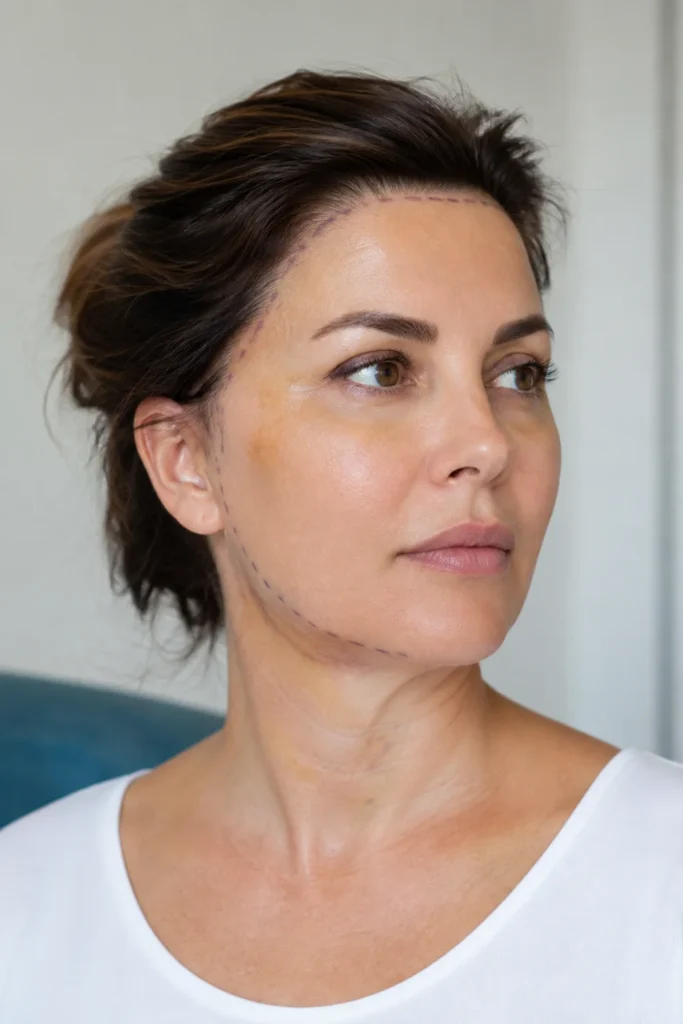
Face Lift Swelling: How Long Does It Last? Swelling usually reaches its most noticeable level during the first few days after facelift surgery and then gradually decreases over the following two to four weeks. Many patients look and feel significantly better after about two weeks, although mild residual swelling can continue for several weeks or even a few months as the tissues settle. The exact timeline varies according to the surgical technique, the extent of the procedure, individual healing speed, skin structure, and whether the surgeon combines the facelift with another facial procedure.
Swelling is a normal part of the body’s healing response. A facelift involves repositioning facial tissues and working beneath the skin, so the body naturally sends fluid and healing cells to the treated areas. Understanding what to expect during each stage of recovery can make the process much less stressful.
Table of Contents
ToggleWhy Does Swelling Occur After a Face Lift?
During facelift surgery, the surgeon carefully lifts and repositions facial tissues to improve sagging around the cheeks, jawline, and lower face. This surgical process temporarily affects small blood vessels and lymphatic drainage pathways. In response, fluid collects within the tissues and creates swelling.
Swelling does not mean something has gone wrong. In most cases, it simply shows that the body has started its normal healing process. Bruising, tightness, mild tenderness, and temporary changes in facial sensation can appear alongside swelling during the early recovery period.
The amount of swelling also differs between patients. Someone undergoing a limited MACS Face Lift may experience a different recovery pattern from a patient having a more extensive lifting procedure. Individual anatomy, age, skin quality, smoking history, medication use, and the extent of surgical correction can all affect recovery.
Patients considering Face Lift in Turkey should discuss the expected healing timeline before surgery rather than comparing their recovery with photographs or experiences found online. Every face responds differently to surgery.
Face Lift Swelling Timeline: What to Expect
While no single recovery schedule applies to everyone, facelift swelling generally follows a predictable pattern.
The First 48 to 72 Hours
Swelling often increases during the first two or three days. The cheeks, jawline, area around the ears, and sometimes the neck may appear fuller than expected.
This stage can surprise patients because the face may temporarily look more swollen on the second or third day than immediately after surgery. That progression usually represents the body’s inflammatory response rather than a problem with the operation.
Patients may also notice that one side looks slightly more swollen than the other. Small differences between the two sides frequently occur because facial anatomy, tissue manipulation, sleeping position, and fluid drainage are not perfectly symmetrical.
Following the surgeon’s postoperative instructions carefully plays an important role during this stage.
Days 4 to 7
Toward the end of the first week, swelling usually begins to decrease. The face may still look noticeably puffy, but patients often start seeing clearer contours around the cheeks and jawline.
Bruising may also change color during this period. Dark purple or blue areas often become lighter yellow or green as the body gradually clears the bruising.
Most patients still feel that their face looks different from its final appearance. This is completely expected. The tissues need considerably more time to settle.
Weeks 2 to 4
The second and third weeks often bring the most noticeable improvement.
Many patients see a significant reduction in visible swelling during this stage. Depending on the procedure and individual recovery, some people feel comfortable returning to social activities or work after approximately two weeks.
However, looking socially presentable does not mean the tissues have completely healed. Small amounts of swelling can remain around the cheeks, jawline, or neck even when other people no longer notice it.
Patients who combine a facelift with a Neck Lift may notice that firmness or swelling below the jaw and around the upper neck takes slightly longer to settle.
One to Three Months
By the first month, much of the obvious swelling usually disappears. Facial contours become easier to appreciate, and the face gradually starts looking more natural.
Subtle swelling may still remain during the following weeks. Patients often notice it more than anyone else because they examine their faces closely each day.
The lower face, jawline, and areas close to the surgical planes may continue changing as inflammation decreases and tissues adjust to their new position.
At around two to three months, many patients have a much clearer idea of their developing facelift appearance.
Three to Six Months
Very subtle tissue changes can continue for several months. At this stage, swelling usually has little effect on everyday appearance, but the face may still become slightly more refined as deeper tissues soften and settle.
Final healing does not happen on an exact calendar date. Some patients reach a stable appearance sooner, while others need more time.
What Factors Affect Face Lift Swelling?
The surgical technique strongly influences recovery. A facelift focusing primarily on the lower face does not involve exactly the same tissue areas as a Midface Lift, which targets structures around the cheeks and central face.
The extent of surgery also matters. Combining several procedures during the same operation can produce more swelling than performing one focused procedure.
Other factors include overall health, circulation, age, skin quality, fluid retention, postoperative activity, sleep position, smoking, and individual healing characteristics.
Patients researching Facial Surgeries in Turkey should therefore avoid choosing a procedure according to recovery time alone. The surgeon needs to match the surgical approach to the patient’s anatomy and aesthetic goals.
A detailed consultation with an experienced aesthetic plastic surgeon helps patients understand which procedure suits their facial structure and what recovery may realistically involve.
How Can You Support Swelling Reduction After a Face Lift?
Patients cannot eliminate swelling immediately, but they can support the body’s natural recovery process.
During the early healing stage, keeping the head elevated while resting or sleeping can help reduce fluid accumulation around the face. Patients should also follow the surgeon’s instructions regarding activity, wound care, showering, medication, and compression garments when prescribed.
Light walking usually helps circulation once the surgeon approves normal movement. Heavy exercise, bending forward repeatedly, lifting heavy objects, and activities that significantly increase blood pressure may need to wait until the surgical team gives clearance.
Hydration and balanced nutrition also support healing. Excessive alcohol intake and smoking can interfere with recovery, so patients should follow the medical team’s recommendations carefully.
Cold applications sometimes help during the early recovery period, but patients should never place ice directly onto healing skin or surgical areas without guidance. Reduced sensation after surgery can make it difficult to judge temperature accurately.
Most importantly, patients should not aggressively massage swollen areas unless their surgeon specifically recommends massage. Different facelift techniques require different postoperative care.
Is Uneven Swelling Normal After a Face Lift?
Some asymmetry during early recovery is common.
One cheek may look slightly larger, one side of the jawline may appear sharper, or one side of the neck may seem more swollen. The two sides of the face rarely heal at precisely the same speed.
Sleeping position can contribute to temporary asymmetry as well. Fluid may collect more noticeably on one side, particularly during the first days after surgery.
The appearance should gradually become more balanced as swelling decreases. Patients should avoid judging facial symmetry or surgical results too early.
However, sudden or rapidly increasing swelling deserves medical attention, especially if it affects one side significantly or appears alongside severe pain, increasing redness, bleeding, fever, breathing problems, or other unexpected symptoms. In that situation, contacting the surgical team promptly is important.
When Will Your Face Look Natural After Surgery?
Many patients focus less on when swelling completely disappears and more on when they will look comfortable in everyday situations.
For a typical recovery, the face often starts looking significantly more natural after two to four weeks. Makeup, hairstyle, and reduced bruising can also make remaining swelling less noticeable.
However, the appearance continues improving after that stage. Facial tissues need time to relax, incisions mature gradually, and newly positioned structures settle.
Patients choosing Face Lift in Turkey should therefore plan enough recovery time before important social events, professional meetings, weddings, or long-distance travel. Scheduling surgery immediately before a major occasion can create unnecessary pressure during recovery.
If timing matters, discuss your calendar with the surgical team before choosing the operation date.
Does the Type of Face Lift Change the Swelling Period?
Yes. Different techniques involve different anatomical areas and levels of tissue manipulation.
A more limited procedure may create less swelling than an extensive facelift combined with neck surgery, fat transfer, eyelid surgery, or another facial operation. However, less swelling does not automatically mean that one surgical technique is better than another.
For example, a Deep Temporal Face Lift focuses on a different facial region than a traditional lower facelift. Because each operation targets different tissues, patients can experience swelling in different locations.
The correct approach depends on facial anatomy, tissue laxity, age-related changes, and the patient’s expectations rather than the shortest possible recovery.
When Should Swelling After a Face Lift Be a Concern?
Gradually improving swelling generally fits the expected healing pattern. Swelling that becomes less noticeable week by week usually reflects normal recovery.
A sudden change deserves more attention.
Contact your surgical team if swelling rapidly increases instead of gradually improving, particularly when the change affects one side more than the other. Severe or worsening pain, marked redness, unusual drainage, fever, shortness of breath, significant bleeding, or sudden facial changes also require prompt medical assessment.
Patients should use their own surgeon’s postoperative instructions as the primary guide because the medical team knows exactly which technique they used and what happened during surgery.
Regular follow-up appointments give the surgeon an opportunity to evaluate healing, monitor swelling, check incision sites, and address concerns before they become more stressful.
How to Stay Patient During Face Lift Recovery
One of the hardest parts of facelift recovery is waiting.
Patients naturally want to see the improvement they expected from surgery, but early swelling can temporarily hide facial definition. Looking in the mirror several times a day can make small fluctuations feel more dramatic than they actually are.
Instead of judging the face every morning, it often helps to think about recovery in weeks rather than days. Comparing photographs taken seven or fourteen days apart gives a much more realistic picture of progress than comparing one day with the next.
Remember that healing rarely follows a perfectly straight line. The face may look slightly more swollen in the morning, after increased activity, or after consuming salty food. Small fluctuations can happen even while overall recovery continues to progress.
Your surgeon can provide the most accurate assessment during postoperative visits and explain whether your swelling fits the expected stage of recovery.
Frequently Asked Questions
1. How long does most swelling last after a face lift?
Most noticeable swelling decreases significantly during the first two to four weeks. Mild residual swelling can remain for several additional weeks, and subtle tissue changes may continue for a few months.
2. When is swelling at its worst after facelift surgery?
Swelling often reaches its highest level around the second or third day after surgery. After this stage, it usually starts decreasing gradually.
3. Can one side of my face stay more swollen than the other?
Yes. Mild uneven swelling frequently appears during early recovery because each side can heal at a slightly different rate. If one side suddenly becomes much larger or painful, contact your surgical team promptly.
4. When can I go out socially after a face lift?
Many patients feel comfortable in social settings after approximately two to three weeks, although this varies according to bruising, swelling, surgical technique, and personal comfort. Your surgeon can give you a more individualized timeline.
5. How long does it take to see the final face lift appearance?
Major changes become much clearer within the first several weeks, but deeper tissues continue settling for several months. The final appearance develops gradually as residual swelling disappears and the facial tissues soften.