


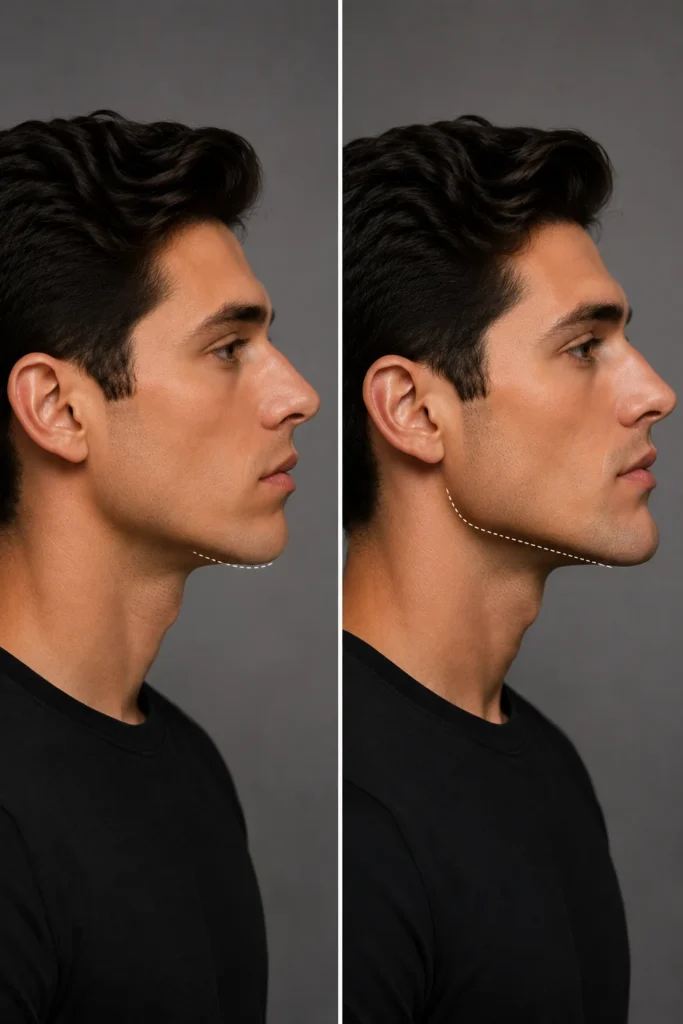
Chin Implant vs. Jaw Implant: Which Procedure Creates a Stronger Facial Profile? The answer depends on where the facial imbalance begins. A chin implant strengthens the central projection of the lower face, while a jaw implant adds width, definition, or angular structure along the jawline. People who want a sharper side profile often benefit more from chin augmentation, whereas those seeking a broader and more sculpted lower face may prefer jaw implants. In some cases, combining both procedures creates the most balanced and powerful facial profile.
Facial structure plays a major role in how people perceive balance, strength, and proportion. Even small changes around the chin or jawline can influence the appearance of the nose, neck, lips, and cheeks. For this reason, choosing between chin and jaw augmentation requires more than simply selecting the procedure that sounds more dramatic.
A surgeon usually examines the face from the front, side, and three-quarter angles before recommending an approach. The ideal treatment should complement the patient’s natural features rather than create an oversized or artificial appearance.
Table of Contents
ToggleWhat Does a Chin Implant Change?
A chin implant adds projection, height, width, or a combination of these features to the chin. Surgeons place the implant over the existing chin bone to create a more defined lower facial profile.
Many people consider chin augmentation because their chin looks recessed when viewed from the side. A weak or underprojected chin can make the nose appear larger, reduce the definition between the face and neck, and create an unbalanced facial profile. By bringing the chin forward, the procedure can improve the relationship between the forehead, nose, lips, and lower face.
A chin implant mainly affects the central part of the lower face. It does not significantly widen the jaw near the angles below the ears. This distinction matters because some patients want stronger forward projection, while others want a wider and more angular jawline.
Common goals of chin implant surgery include:
Improving a recessed or small chin
Creating a stronger side profile
Enhancing the transition between the chin and neck
Balancing a prominent-looking nose
Improving lower facial symmetry
Adding subtle width to the front of the chin
Patients researching a Chin Implant in Turkey often focus on facial harmony rather than chin size alone. A well-planned implant should match the width of the mouth, the shape of the jaw, and the natural projection of the lips and nose.
What Does a Jaw Implant Change?
Jaw implants enhance the sides and rear angles of the lower jaw. Surgeons commonly place them near the mandibular angles, which sit below and slightly in front of the ears. These implants can create a wider, sharper, and more structured lower face.
Jaw augmentation often appeals to people who feel that their lower face looks narrow, rounded, or poorly defined. It can also improve the appearance of asymmetry when one side of the jaw looks less developed than the other.
Unlike a chin implant, a jaw implant does not primarily bring the centre of the chin forward. Instead, it strengthens the outer framework of the lower face. From the front, this can create a more angular shape. From the three-quarter view, it can improve the transition between the cheeks, jawline, and chin.
Typical goals of jaw implant surgery include:
Increasing jaw width
Creating more prominent jaw angles
Improving lower facial definition
Correcting mild skeletal asymmetry
Producing a more angular or masculine appearance
Strengthening the jawline from the chin to the ears
People considering Jaw Implants in Turkey often want a full-face transformation rather than a change limited to the chin. Jaw implants can make the lower third of the face appear more substantial, especially when the natural mandibular angles lack definition.
Which Procedure Creates a Stronger Side Profile?
A chin implant usually creates a more noticeable improvement in the side profile. The chin forms one of the main reference points when evaluating facial projection from the side. When it sits too far back, the entire lower face can look weak even if the jawline has adequate width.
Moving the chin forward can improve several visual relationships at once. It can make the nose look more proportionate, create clearer separation between the jaw and neck, and make the lower lip appear better supported.
Jaw implants influence the side profile differently. They add shape near the back of the jaw, which can create a sharper angle between the neck and jawline. However, they do not correct a recessed chin. If the chin remains underprojected, jaw implants alone may create width without achieving full profile balance.
For someone whose main concern involves a weak chin in photographs or a lack of forward projection, chin augmentation often offers the more direct solution. For someone who already has adequate chin projection but lacks jaw angles, jaw augmentation may produce the stronger structural effect.
Which Procedure Creates a Stronger Front View?
Jaw implants usually create a more dramatic change from the front. They can widen the lower face and make the jawline look more defined on both sides. This change often creates a square, angular, or athletic appearance.
A chin implant can also improve the front view, especially when the chin looks short, narrow, or asymmetrical. However, its impact remains concentrated around the centre of the lower face. It does not significantly alter the width near the back of the jaw.
The right choice depends heavily on the person’s natural face shape. For example, someone with a narrow lower face and wide cheekbones may benefit from additional jaw width. A person with a round face and a small chin may gain better balance from forward chin projection instead of wider jaw angles.
A surgeon also considers gender-related aesthetic goals without forcing every face into the same template. Some patients prefer a broad and square lower face, while others want a tapered jawline with a refined but defined chin. A stronger facial profile does not always mean a larger or wider face.
Chin Implant vs. Jaw Implant for Facial Masculinisation
Both procedures can support facial masculinisation, but they create different effects.
A chin implant can provide stronger forward projection and a more prominent central lower face. A wider or squarer chin implant may also reduce the appearance of a pointed chin. These changes can help create a firmer and more structured profile.
Jaw implants can increase the width and prominence of the mandibular angles. This often produces a broader lower face and a sharper transition between the jaw and neck. For patients who want a noticeably more angular appearance, jaw augmentation may create a more powerful transformation.
Some patients choose both chin and jaw implants because masculinity depends on the entire lower facial framework. A strong chin with narrow jaw angles may still look unbalanced. Likewise, broad jaw angles with a recessed chin may not create a cohesive profile.
The surgeon should tailor implant shape, width, and projection to the patient’s anatomy. An implant that looks balanced on one face may look too large or too square on another.
Chin Implant vs. Jaw Implant for Facial Feminisation
Chin and jaw procedures can also support facial feminisation, although surgeons often use more conservative implant shapes and dimensions.
A small chin implant may improve projection without making the chin appear heavy or wide. This approach can create a smoother side profile while preserving a refined lower facial shape.
Jaw implants do not always form part of facial feminisation because greater jaw width can create a stronger and more angular appearance. However, carefully selected implants may correct asymmetry or improve an underdeveloped jaw without producing excessive width.
The desired facial shape guides the treatment plan. Some patients prefer a soft V-shaped lower face, while others want a defined jawline that still looks slim. Careful planning helps avoid an overly square or bulky result.
Can Chin and Jaw Implants Be Combined?
Yes, surgeons can combine chin and jaw implants when the entire lower face lacks projection and definition. This approach can create a continuous line from the chin to the jaw angles, improving balance from several viewing angles.
A combined procedure may suit someone who has:
A recessed chin
Narrow jaw angles
Poor jawline definition
Lower facial asymmetry
A weak transition between the face and neck
Disproportion between the upper and lower face
Combining the procedures does not mean choosing the largest implants. In many cases, moderate implants in multiple areas create a more natural result than one oversized implant in the chin or jaw.
Patients considering a Chin Implant in Turkey alongside jaw augmentation should discuss whether both areas genuinely need enhancement. A detailed facial assessment can show whether the main concern comes from the chin, jaw angles, neck contour, soft tissue, or a combination of factors.
Implant Shape, Size, and Material Matter
The name of the procedure only describes the treatment area. The actual result depends heavily on implant design.
Chin implants come in different shapes. Some primarily add forward projection, while others wrap around the sides of the chin to add width and create a smoother transition into the jawline. The surgeon selects the implant according to the existing bone structure and the desired facial shape.
Jaw implants also vary in thickness, length, and angle. A short implant may enhance only the mandibular angle, while an extended implant can improve a larger section of the jawline.
Many facial implants use biocompatible materials designed for long-term placement. Silicone remains a common option because surgeons can shape and position it precisely. Other materials may integrate more closely with surrounding tissue. Each material has advantages and limitations related to placement, removal, customisation, and tissue response.
The surgeon should explain why a specific implant design suits the patient’s anatomy. Choosing an implant based only on a photograph of another person rarely leads to the most natural outcome.
Recovery After Chin and Jaw Implant Surgery
Recovery varies according to the number of implants, surgical technique, and individual healing response. Chin implant surgery often involves less swelling than combined jaw augmentation because it affects a smaller area.
Patients may experience tightness, swelling, tenderness, and temporary numbness during the early healing period. Jaw implants can create more widespread swelling around the lower cheeks and jaw angles. This swelling may make the face appear broader than expected at first.
Most patients return to light daily activities within a relatively short period, although visible swelling can continue for several weeks. The final contour gradually becomes clearer as the tissues settle around the implants.
Surgeons may place implants through an incision inside the mouth or through a small external incision beneath the chin, depending on the treatment area and surgical plan. Good oral hygiene, careful eating, and adherence to postoperative instructions support a smoother recovery.
Patients researching Jaw Implants in Turkey should include recovery planning in their decision. Travel arrangements, follow-up appointments, physical activity, and work schedules all influence the overall treatment experience.
How Do You Choose Between a Chin Implant and a Jaw Implant?
The clearest way to choose involves identifying the location of the facial imbalance.
A chin implant may suit you when:
Your chin looks recessed from the side
Your nose appears prominent because of weak chin projection
The front of your lower face looks short or narrow
Your jawline has reasonable width but lacks central definition
You want a targeted improvement with a smaller treatment area
A jaw implant may suit you when:
Your jaw angles look rounded or underdeveloped
Your lower face appears too narrow
You want more width from the front
You want a sharper mandibular angle
Your chin already has adequate projection
A combined approach may suit you when both the chin and jaw angles lack structure. Digital imaging or facial measurements can help illustrate potential changes, but these tools should guide the consultation rather than promise an exact result.
The strongest facial profile comes from proportion, not implant size. A subtle change that aligns the chin, jaw, lips, cheeks, and neck often creates a more attractive appearance than an aggressive transformation.
Frequently Asked Questions
1. Is a chin implant more noticeable than a jaw implant?
A chin implant usually creates a more obvious change from the side, especially when the chin looks recessed. Jaw implants tend to create a more noticeable difference from the front and three-quarter views by increasing lower facial width and angularity.
2. Can a jaw implant fix a weak chin?
A jaw implant does not directly correct a weak or recessed chin because it mainly enhances the sides and angles of the jaw. A chin implant or another chin augmentation technique addresses central projection more effectively.
3. Do chin and jaw implants look natural?
They can look natural when the surgeon selects the right dimensions and positions them according to the patient’s bone structure. Oversized implants or poorly matched shapes can create an artificial appearance, so personalised planning matters.
4. Can chin and jaw implants improve facial symmetry?
Yes, implants can improve mild asymmetry by adding volume and structure to an underdeveloped area. Significant skeletal asymmetry may require a different surgical approach, so a detailed facial examination helps determine the appropriate treatment.
5. Which procedure gives a more masculine jawline?
Jaw implants often create a broader and more angular lower face, while a chin implant adds stronger forward projection. Patients seeking comprehensive facial masculinisation may benefit from combining both procedures when their anatomy supports that approach.