


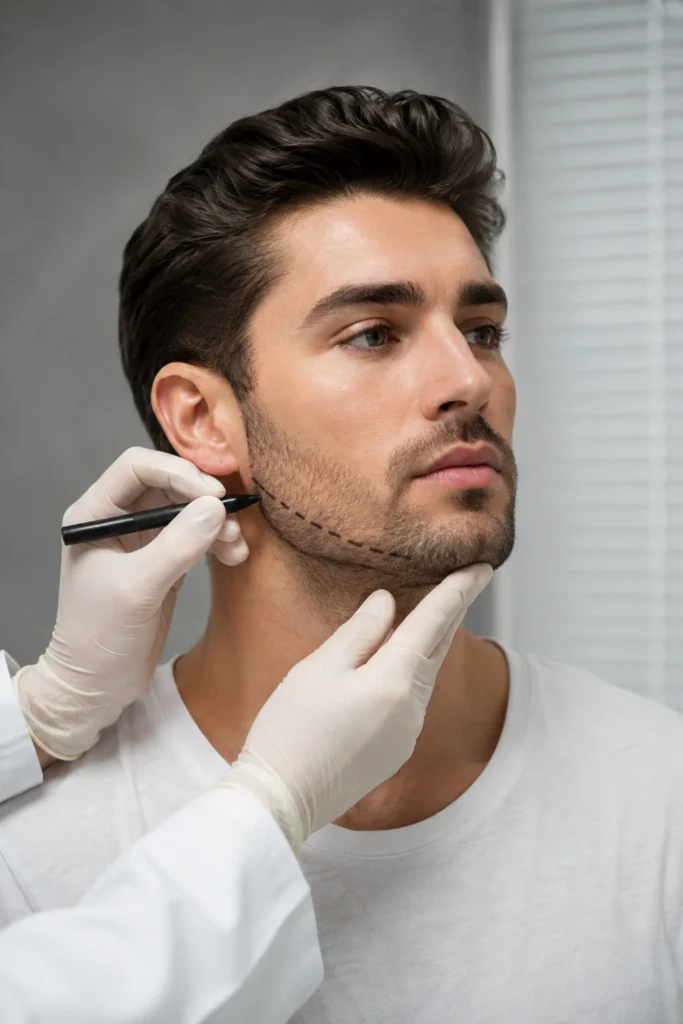
Can Jaw Implants Improve Facial Asymmetry? Yes, jaw implants can improve certain types of facial asymmetry by adding structure, width, projection, or definition to areas where the lower face appears less developed. When one side of the jaw looks smaller, flatter, or less prominent than the other, a carefully planned implant can create a more balanced appearance. However, facial asymmetry does not always come from the jawbone alone, so a surgeon needs to evaluate the chin, jawline, bite, soft tissues, and overall facial proportions before recommending surgery.
No human face has perfect symmetry. Small differences between the right and left sides often contribute to a natural and distinctive appearance. The question becomes more relevant when asymmetry noticeably affects the jawline, facial proportions, or profile. In these cases, jaw implant surgery may help improve balance while preserving the natural character of the face.
People considering Jaw Implants in Turkey often focus on creating a stronger jawline, but correction of asymmetry has also become an important part of surgical planning. Modern facial analysis allows surgeons to examine the lower face from multiple angles and design a treatment strategy according to each patient’s anatomy rather than following a single standard shape.
Table of Contents
ToggleHow Do Jaw Implants Improve Facial Asymmetry?
Jaw implants add volume and structural definition to selected areas of the lower jaw. Surgeons can use them to improve differences in jaw width, angle definition, projection, or contour between the two sides of the face.
For example, one side of the mandibular angle may appear more prominent while the opposite side looks narrow or underdeveloped. Instead of increasing both sides equally, the surgeon can adjust implant dimensions according to the existing asymmetry. This approach aims to create better balance rather than simply making the jaw larger.
Jaw implants may help address:
Unequal jaw angles
Differences in lower facial width
A less developed side of the mandible
Poor jawline definition on one side
Mild skeletal asymmetry
Imbalance between the chin and jawline
Facial proportions that look uneven from the front
A surgeon also examines the face in three dimensions. An asymmetry that looks obvious in a frontal photograph may appear different from the side or three-quarter view. For this reason, successful jaw implant planning involves much more than measuring the distance between facial landmarks.
The goal usually involves improving harmony rather than creating mathematical symmetry. Trying to make every measurement identical can sometimes produce an unnatural appearance because skin thickness, muscle volume, fat distribution, and bone structure already differ slightly between the two sides.
What Types of Facial Asymmetry Can Jaw Implants Address?
Jaw implants work best when the asymmetry relates mainly to the skeletal structure of the lower face. They can provide particularly noticeable improvement when one jaw angle lacks projection or when one side of the mandible appears narrower.
Some people naturally develop an uneven lower jaw. Others notice asymmetry after facial growth, previous surgery, trauma, or changes in the surrounding tissues. A detailed examination helps identify whether the difference comes from bone, muscle, fat, dental alignment, or a combination of these factors.
For mild to moderate skeletal differences, implants can offer a useful option because they allow the surgeon to increase volume exactly where the face needs it. When asymmetry is more complex, the surgeon may recommend another procedure or combine jaw implants with complementary treatments.
For instance, significant bite problems or major differences in jaw position may require orthognathic surgery rather than cosmetic implants alone. Jaw implants change contour and projection, but they do not reposition the entire jaw or correct dental alignment.
This distinction matters for anyone researching Facial Surgeries in Turkey. A consultation should focus not only on appearance but also on the anatomical reason behind the asymmetry. Choosing the right procedure starts with understanding what actually creates the imbalance.
Jaw Implants and Facial Implants: Creating Better Facial Balance
Facial Implants include several types of implants designed to improve facial contours. Jaw implants, chin implants, and cheek implants all fall within this broader category.
Facial asymmetry sometimes involves more than one part of the face. A patient may have a smaller jaw angle on one side together with a slightly recessed chin or uneven cheek projection. In such cases, treating only one isolated point may not create the desired overall balance.
The surgeon looks at the relationship between:
Jaw width
Chin projection
Cheekbone prominence
Facial height
Neck-to-jaw transition
Soft-tissue thickness
Overall facial shape
For some patients, combining a jaw implant with a chin implant can create a smoother lower facial contour. Others may benefit from limited correction on one side rather than bilateral augmentation.
Patients researching Facial Implants in Turkey should therefore look beyond implant size alone. Implant position, shape, thickness, and its relationship with surrounding facial structures play equally important roles.
A strong jaw does not automatically mean a balanced jaw. An implant that adds too much width or projection can exaggerate existing differences. Careful planning aims to support the natural facial structure rather than overpower it.
Can Custom Jaw Implants Offer More Precise Asymmetry Correction?
Custom jaw implants can provide additional flexibility when facial asymmetry involves unusual or highly specific anatomical differences. Surgeons can design these implants using detailed imaging of the patient’s facial skeleton.
Standard implants come in predetermined shapes and sizes. They work well for many patients, especially when the goal involves general jawline enhancement. However, noticeable asymmetry may require different augmentation on each side.
A custom implant allows the surgical plan to account for differences in:
Mandibular angle height
Jaw width
Bone projection
Side-to-side contour
Lower facial proportions
Three-dimensional imaging can help surgeons evaluate how the jaw differs from one side to the other. The surgeon can then plan an implant that complements the existing anatomy.
That does not mean every patient needs a custom implant. A skilled surgeon may achieve excellent balance with standard implants, particularly when the asymmetry is mild. The choice depends on facial anatomy, aesthetic goals, implant availability, surgical technique, and the degree of correction required.
For patients exploring Jaw Implants in Turkey, asking whether the surgeon uses three-dimensional facial analysis or customized surgical planning can help them understand the available options.
What Jaw Implant Surgery Can and Cannot Correct
Understanding the limits of jaw implants is just as important as understanding their benefits.
Jaw implants primarily change the shape and projection of the lower facial skeleton. They work well when insufficient bone volume creates the visual imbalance. However, not every asymmetric feature responds to an implant.
For example, asymmetry may come from:
Unequal masseter muscle size
Different amounts of facial fat
Dental or bite irregularities
Jaw deviation
Previous facial trauma
Nerve-related muscle differences
Skin or soft-tissue changes
If muscle size causes most of the asymmetry, adding an implant may not address the main problem. Similarly, severe skeletal deviation may require repositioning surgery rather than augmentation.
This is why facial assessment matters before any operation. The surgeon needs to identify the dominant cause of asymmetry and decide whether an implant can realistically improve it.
A responsible surgical plan does not promise perfect symmetry. Instead, it focuses on making visible differences less noticeable while keeping the face natural.
How Surgeons Plan Jaw Implants for Facial Asymmetry
Planning begins with facial examination. The surgeon looks at the patient from the front, profile, three-quarter angle, and sometimes from below to understand the jawline shape.
Photographs and medical imaging can reveal differences that may not appear obvious during a quick visual examination. Surgeons may evaluate the mandibular angles, chin position, dental midline, facial width, and soft-tissue distribution.
The patient’s expectations also shape the treatment plan. Some people want subtle correction, while others want a sharper and more structured jawline at the same time.
During the consultation, patients should explain what bothers them most. Saying “my face looks asymmetrical” provides a starting point, but identifying whether the concern involves one jaw angle, the chin, the lower facial width, or the profile helps create a more targeted strategy.
Clinics offering Facial Implants in Turkey increasingly use digital planning methods to demonstrate how structural changes may affect facial balance. Digital simulations cannot guarantee an exact postoperative appearance, but they can support communication between the patient and surgeon.
Can Jaw Implants Make the Face Look More Symmetrical From the Front?
Yes, jaw implants can often make the lower face look more balanced from the front when the asymmetry comes from unequal jaw width or angle definition.
The frontal view plays an important role because people commonly notice asymmetry when taking photographs, looking in the mirror, or seeing themselves on video calls. One side may appear wider, lower, or more defined than the other.
Correcting the weaker side can reduce this visual difference. In some cases, surgeons place implants on both sides but use different sizes or shapes to create better proportional balance.
The surgeon also needs to consider the chin. Even perfectly balanced jaw angles can still look asymmetric if the chin shifts to one side. Depending on the anatomy, the surgical plan may include chin augmentation, genioplasty, or another corrective approach.
This comprehensive assessment separates simple jawline enhancement from true facial asymmetry treatment.
Jaw Implants in Turkey for International Patients
Turkey has become a well-known destination for facial aesthetic procedures, including jawline enhancement and other implant-based surgeries. Patients researching Jaw Implants in Turkey often compare surgeon experience, clinic standards, surgical planning methods, costs, accommodation options, and postoperative follow-up.
International patients should focus primarily on the quality of medical planning rather than choosing a procedure based only on price. Facial asymmetry requires an individualized approach, so the surgeon’s understanding of facial anatomy and implant positioning plays a major role.
Patients can ask whether the treatment plan includes:
Detailed facial measurements
Imaging when clinically necessary
Implant size and shape selection
Asymmetry-specific surgical planning
Information about recovery
Postoperative follow-up
Clear discussion of possible risks
People considering Facial Surgeries in Turkey may also combine jaw implant surgery with other facial procedures. However, combining surgeries requires careful evaluation because adding multiple changes does not always produce better facial harmony. The surgeon should recommend each procedure for a specific anatomical reason.
What Does Recovery After Jaw Implant Surgery Involve?
Recovery varies according to the implant type, surgical approach, and whether the patient undergoes additional facial procedures at the same time.
Swelling usually becomes the most noticeable early change. Because one side may swell more than the other, the face can temporarily look more asymmetric during the first stage of recovery. This appearance does not necessarily reflect the final implant position or long-term result.
Patients usually need time for swelling to decrease and the tissues to settle around the implant. The jawline gradually becomes more defined as healing progresses.
During recovery, surgeons typically give individual instructions about oral hygiene, diet, physical activity, sleeping position, and incision care. Patients should follow their own surgeon’s guidance because recovery protocols can differ depending on technique.
People traveling for Jaw Implants in Turkey should also plan enough time for early postoperative checks before flying home. They should discuss travel timing with the surgical team before booking return flights.
How Natural Can Jaw Implant Results Look?
Natural-looking results depend heavily on proportion. The implant should complement the chin, cheeks, neck, and overall facial structure.
An implant that looks impressive in isolation may not suit every face. Someone with delicate facial features may need subtle enhancement, while a patient with a broader skeletal structure may benefit from greater projection.
When correcting asymmetry, the surgeon often aims for less noticeable imbalance rather than dramatic enlargement. Small differences in implant thickness can sometimes create meaningful improvement.
High-quality Facial Implants should support the existing facial anatomy instead of creating an artificial or overly angular appearance. This principle becomes especially important when patients want both stronger jaw definition and improved symmetry.
Who May Be a Good Candidate for Jaw Implant Surgery?
A suitable candidate typically has concerns related to jaw shape or lower facial balance and understands what implant surgery can realistically achieve.
Jaw implants may suit people who:
Have an underdeveloped jaw angle
Notice a clear difference between the two sides of the lower face
Want stronger jawline definition
Have stable facial growth
Have realistic expectations
Understand that perfect symmetry does not exist
A medical consultation remains essential because health history, facial anatomy, previous procedures, and individual risk factors all influence candidacy.
Patients considering Facial Implants in Turkey should share information about previous fillers, facial surgeries, dental treatments, trauma, and other procedures. These details help the surgeon understand the existing anatomy and develop a safer treatment plan.
Frequently Asked Questions About Jaw Implants and Facial Asymmetry
1. Can jaw implants completely correct facial asymmetry?
Jaw implants can significantly improve certain types of lower facial asymmetry, especially when differences in bone volume or jaw projection create the imbalance. They cannot guarantee perfect symmetry because muscles, fat, skin, and other facial structures also influence appearance.
2. Can a surgeon place a jaw implant on only one side?
Yes. When one side of the jaw lacks volume or definition, the surgeon may use a unilateral implant. In other cases, the surgeon may place implants on both sides with different dimensions to create better balance.
3. Are custom jaw implants better for facial asymmetry?
Custom implants can provide greater precision for complex or significant skeletal differences because their design follows the patient’s individual anatomy. Standard implants can still work very well for mild or moderate asymmetry.
4. Can jaw implants correct an uneven chin too?
Jaw implants mainly improve the mandibular angle and jawline. If chin position contributes to the asymmetry, the surgeon may recommend a chin implant, genioplasty, or another approach alongside jaw augmentation.
5. How do I know whether I need jaw implants or another facial surgery?
A facial plastic surgeon or appropriately qualified surgeon needs to determine whether the asymmetry comes from bone, soft tissue, muscle, dental alignment, or jaw position. Patients exploring Jaw Implants in Turkey, Facial Implants in Turkey, or broader Facial Surgeries in Turkey should choose treatment only after a detailed facial assessment.