


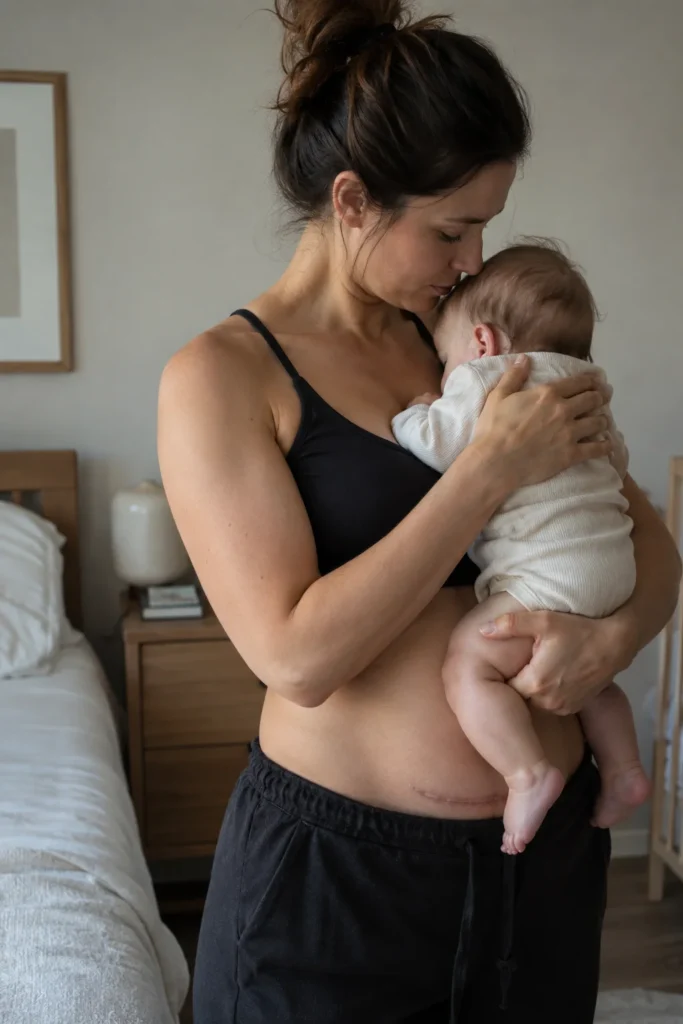
C-Section Belly Overhang: Can a Tummy Tuck Fix It? Yes, a tummy tuck can address the loose skin and weakened abdominal tissues that often contribute to an overhang after a C-section. Pregnancy stretches the skin and abdominal wall, while a cesarean incision may change the way the lower abdominal tissues settle during recovery. When diet, exercise, and time cannot improve excess skin or muscle separation, tummy tuck surgery can reshape the abdomen by removing loose tissue and tightening the abdominal wall. The right approach depends on the amount of excess skin, muscle condition, scar position, body weight, and future pregnancy plans.
Table of Contents
ToggleWhat Is a C-Section Belly Overhang?
A C-section belly overhang refers to a fold or pouch of skin and soft tissue that sits above or around a cesarean scar. Some people describe it as a C-section shelf, apron belly, or lower abdominal pouch. Its appearance can vary considerably. For some women, it creates only a small fold above the scar, while others experience more noticeable loose skin across the lower abdomen.
The C-section incision itself does not always cause the overhang. Pregnancy creates major changes throughout the abdominal area long before delivery. As the uterus expands, abdominal skin stretches, connective tissues loosen, and the abdominal muscles move apart to accommodate the growing baby.
After childbirth, the uterus gradually decreases in size, but the skin and abdominal wall do not always return to their previous condition. A C-section scar can also influence how the soft tissues sit around the lower abdomen, making an existing fold appear more prominent.
Genetics, age, skin elasticity, weight changes, number of pregnancies, and the degree of abdominal stretching can all influence how the stomach looks after pregnancy.
Why Does the Belly Overhang Remain After a C-Section?
The body needs time to recover after childbirth. During the first several months, swelling decreases, tissues heal, and the abdomen continues to change. However, certain structural changes may remain even after full recovery.
Excess skin represents one of the most common reasons. Skin stretches considerably during pregnancy, and it does not always contract enough afterward. People with significant stretching, multiple pregnancies, major weight fluctuations, or naturally lower skin elasticity may notice more persistent looseness.
Another factor involves the abdominal muscles. Pregnancy can separate the two sides of the rectus abdominis muscles, creating a condition called diastasis recti. This separation may contribute to a rounded or protruding abdominal appearance even in people who have returned to their pre-pregnancy weight.
Fat distribution can also play a role. A small amount of localized fat around the lower abdomen may make the fold more noticeable. However, excess fat and excess skin require different approaches, which makes an individualized examination important before choosing a treatment.
The C-section scar adds another layer to this anatomy. Scar tissue may attach more firmly to deeper tissues while the skin and fat above it remain loose. This difference can create a visible shelf-like contour.
Can Exercise Get Rid of a C-Section Overhang?
Exercise supports overall health, improves muscle strength, and can help reduce body fat. Core rehabilitation can also improve abdominal control after pregnancy. However, exercise cannot remove significant excess skin.
This distinction matters when deciding whether a tummy tuck makes sense. If the lower abdominal fullness mainly comes from body fat, changes in nutrition and physical activity may improve the area. If stretched skin forms the majority of the overhang, losing additional weight may not eliminate the fold.
Exercise also cannot directly remove a C-section scar or surgically reconnect abdominal tissues. Targeted postpartum exercises may strengthen the core, but significant diastasis recti sometimes continues despite regular training.
For this reason, a person can maintain a healthy weight, exercise consistently, and still have a lower abdominal pouch. That does not necessarily indicate a lack of fitness. The underlying issue may relate more to skin elasticity and structural changes from pregnancy than to body fat.
How Does a Tummy Tuck Correct a C-Section Belly Overhang?
A tummy tuck, medically known as abdominoplasty, reshapes the abdominal area by addressing excess skin and, when necessary, weakened or separated abdominal tissues.
During a standard tummy tuck, the surgeon removes excess skin from the lower abdomen and repositions the remaining skin to create a smoother contour. If pregnancy has caused significant abdominal muscle separation, the surgeon can tighten the abdominal wall during the same procedure.
This combination makes tummy tuck surgery particularly relevant for postpartum abdominal changes. Instead of focusing only on fat reduction, it addresses several structural factors that may contribute to a C-section belly overhang.
The exact surgical plan varies from person to person. Someone with a small amount of loose skin below the belly button may require a different technique from someone with extensive laxity across the entire abdomen.
Patients researching Tummy Tuck in Turkey should therefore look beyond the procedure name alone and focus on a personalized surgical assessment. The surgeon needs to evaluate skin quality, abdominal wall condition, existing scars, fat distribution, and overall proportions before defining the appropriate technique.
What Happens to the C-Section Scar During a Tummy Tuck?
Many people who consider abdominoplasty after childbirth already have a horizontal scar from their C-section. Naturally, they want to know whether tummy tuck surgery creates an additional visible scar.
In many cases, the surgeon can incorporate the existing C-section scar into the area of skin removed during surgery. This means the old scar may disappear along with the excess lower abdominal skin. The tummy tuck itself creates a new horizontal scar positioned low on the abdomen.
Scar placement depends on the patient’s anatomy, the amount of skin removed, and the surgical technique. Surgeons generally plan the incision with clothing and underwear lines in mind, although individual anatomy ultimately determines its exact location and length.
The final appearance of a scar also varies according to genetics, skin characteristics, healing response, postoperative care, and smoking status. Scars typically change gradually rather than reaching their final appearance immediately after surgery.
Do You Need a Full or Mini Tummy Tuck?
Not every C-section overhang requires the same type of abdominoplasty. The location and amount of loose skin play an important role in choosing between a mini and full tummy tuck.
Mini Tummy Tuck
A mini tummy tuck primarily targets the lower abdomen below the belly button. It may suit selected patients who have relatively limited skin laxity and lower abdominal concerns.
The procedure usually involves a shorter incision than a full tummy tuck and removes a smaller amount of skin. However, the word “mini” does not automatically mean that it represents the better or easier choice. If loose skin or muscle separation extends higher across the abdomen, a limited procedure may not address the full concern.
Full Tummy Tuck
A full tummy tuck addresses a larger portion of the abdomen. The surgeon removes excess lower abdominal skin, tightens the abdominal wall when appropriate, and repositions the belly button as the skin shifts downward.
People with significant post-pregnancy skin laxity or abdominal muscle separation may benefit more from this broader approach.
A consultation helps determine which technique matches the patient’s anatomy rather than choosing a procedure based solely on scar length or recovery expectations.
Can a Tummy Tuck Remove C-Section Fat Too?
A tummy tuck primarily treats loose skin and abdominal wall laxity. It does remove some fat because the surgeon removes skin together with the underlying fatty tissue. However, abdominoplasty does not function as a weight-loss procedure.
When localized fat deposits affect the waist or surrounding abdominal areas, a surgeon may combine liposuction with tummy tuck surgery in suitable patients. Liposuction targets fat cells, while abdominoplasty focuses more directly on loose skin and abdominal structure.
This distinction also matters for people comparing different Body Surgeries in Turkey. Procedures that reshape the body do not all address the same anatomical concern. A detailed assessment helps determine whether loose skin, localized fat, muscle separation, or a combination of these factors creates the appearance that the patient wants to change.
Who Is a Good Candidate for Tummy Tuck After a C-Section?
A good candidate usually has persistent abdominal skin laxity after pregnancy and realistic expectations about what surgery can change. Stable body weight also helps create more predictable contouring because significant weight changes after surgery can stretch the tissues again.
Timing matters as well. The abdomen continues to change during postpartum recovery, so undergoing surgery too soon after childbirth can interfere with the body’s natural healing process.
Future pregnancy plans deserve particular attention. Pregnancy after a tummy tuck remains possible, but another pregnancy can stretch the repaired abdominal wall and skin again. For that reason, many people choose abdominoplasty after completing their planned pregnancies.
General health also influences surgical planning. Medical history, medications, previous abdominal operations, smoking or nicotine use, and healing history all provide important information during the consultation.
How Long After a C-Section Can You Have a Tummy Tuck?
There is no universal waiting period that applies to every patient. The body needs sufficient time to recover from pregnancy and C-section surgery before another abdominal operation.
Hormonal changes, postpartum weight fluctuations, breastfeeding, abdominal tissue recovery, and overall health can affect timing. Surgeons generally prefer patients to reach a stable weight and complete the major stages of postpartum recovery before proceeding with elective body contouring.
Rather than focusing on a specific number of months alone, the decision should consider how stable the body has become after pregnancy.
Patients considering a Tummy Tuck in Istanbul after childbirth should discuss their delivery date, breastfeeding status, weight changes, previous C-sections, and future pregnancy plans during consultation. These details help the surgeon establish an appropriate treatment timeline.
What Is Recovery Like After Tummy Tuck Surgery?
Recovery varies according to the extent of surgery, whether the abdominal wall requires tightening, and whether the surgeon combines abdominoplasty with another procedure.
During the early recovery period, patients commonly experience swelling, tightness, tenderness, and restricted movement. Standing completely upright may initially feel uncomfortable because the abdominal tissues remain tight. Mobility generally improves gradually as healing progresses.
Surgeons usually encourage gentle walking early in recovery to support circulation. More demanding activities, heavy lifting, abdominal exercises, and intense workouts require a longer break.
People with young children need to plan carefully because lifting a baby or toddler can place considerable strain on the healing abdomen. Arranging support at home during the initial recovery period can make everyday routines easier and help protect the surgical area.
Swelling does not disappear immediately. The abdominal contour continues to settle over the following weeks and months, so patients should not judge the final appearance during early recovery.
Can the C-Section Belly Come Back After a Tummy Tuck?
Tummy tuck surgery removes excess skin permanently from the treated area, but the body continues to change throughout life. Significant weight gain, major weight loss, aging, and future pregnancies can alter the abdominal contour after surgery.
Maintaining a relatively stable weight helps preserve the result. Regular physical activity and balanced nutrition also support long-term body composition, although they cannot stop natural aging.
Another pregnancy can stretch both the skin and abdominal wall again. This does not mean that pregnancy after abdominoplasty automatically creates a medical problem, but it may change the aesthetic result and recreate some degree of looseness.
Frequently Asked Questions
1. Can a tummy tuck completely remove a C-section overhang?
A tummy tuck can significantly reduce or remove an overhang when excess skin and abdominal tissue create the fold. The degree of correction depends on skin laxity, fat distribution, abdominal muscle condition, and scar position.
2. Will my C-section scar disappear with a tummy tuck?
In some cases, the surgeon removes the existing C-section scar together with the excess lower abdominal skin. A tummy tuck creates its own horizontal scar, so the procedure does not leave the abdomen completely scar-free.
3. Is liposuction enough for a C-section pouch?
Liposuction targets localized fat but does not remove loose skin or repair abdominal muscle separation. If stretched skin creates the pouch, liposuction alone may not address the main concern.
4. Can I have a tummy tuck if I plan to have another baby?
Pregnancy after a tummy tuck can occur, but pregnancy may stretch the skin and abdominal wall again and change the surgical result. Patients who plan future pregnancies should discuss timing carefully with their surgeon.
5. Does a tummy tuck help with diastasis recti after pregnancy?
A tummy tuck can include tightening of separated abdominal tissues when clinically appropriate. The surgeon evaluates the abdominal wall during consultation and determines whether muscle repair should form part of the surgical plan.