


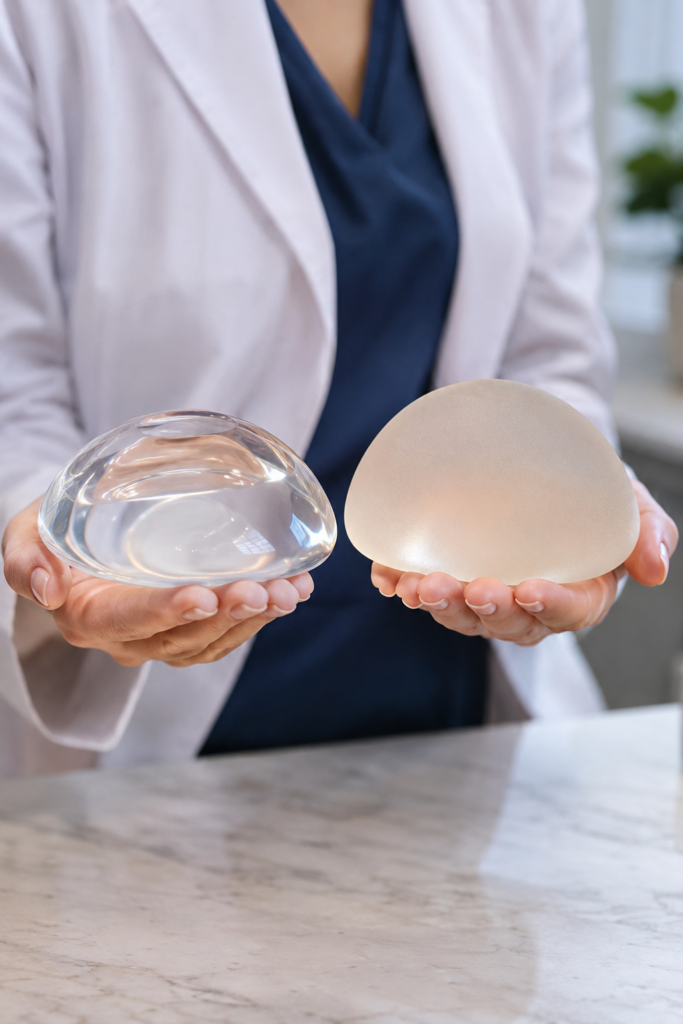
Silicone vs Saline Breast Implants: Key Differences come down to their filling materials, texture, appearance, rupture behavior, and long-term monitoring needs. Silicone implants contain a cohesive silicone gel that generally feels more similar to natural breast tissue, while saline implants contain sterile saltwater and often feel slightly firmer. Both options can increase breast volume and improve breast proportions, but neither guarantees a particular appearance or eliminates surgical risks. Understanding these differences helps patients choose an implant that suits their anatomy, aesthetic preferences, and long-term expectations.
Choosing breast implants involves more than deciding on a cup size. Many patients wonder which material looks more natural, which feels softer, and what happens if an implant ruptures. Others want to know whether one option lasts longer or requires less monitoring. These questions deserve clear answers before making a surgical decision.
Table of Contents
ToggleWhat Is the Difference Between Silicone and Saline Breast Implants?
Silicone and saline implants share a similar basic structure: both have an outer silicone elastomer shell. The primary difference lies in the material inside that shell.
Silicone implants contain a cohesive silicone gel, while saline implants contain sterile saltwater. This difference affects how the implants feel, how surgeons insert them, and how patients monitor them over time.
Patients exploring Breast Surgeries in Istanbul, Turkey often compare these options when researching breast augmentation and personalized surgical planning.
What Are Silicone Breast Implants?
Silicone breast implants contain a gel designed to resemble the softness and movement of natural breast tissue.
Manufacturers produce different gel consistencies, ranging from relatively soft to highly cohesive. More cohesive gels maintain their shape more firmly, while softer gels may move differently within the breast.
Patients who prioritize a natural feel often prefer silicone implants, particularly when they have limited existing breast tissue.
However, implant texture, shape, placement, and surrounding tissue also influence the final appearance.
What Are Saline Breast Implants?
Saline implants contain sterile saltwater inside a silicone shell.
During surgery, the surgeon can insert certain saline implants while empty and fill them after positioning. This approach may allow a smaller insertion incision in some cases.
Saline implants can provide predictable volume, but some patients notice greater firmness or visible rippling compared with silicone alternatives.
Their appearance depends on implant size, placement, skin thickness, and the amount of natural breast tissue covering the implant.
Which Breast Implant Looks More Natural?
A natural-looking result depends on more than the filling material.
Breast shape, existing tissue, skin elasticity, chest width, implant dimensions, and surgical placement all contribute to the final appearance.
Patients considering Breast Implant in Turkey should evaluate these factors rather than choosing an implant based on material alone.
Do Silicone Implants Look More Natural?
Silicone implants often create a softer appearance because the gel maintains a consistency closer to natural breast tissue.
They may also reduce the visibility of certain implant edges or folds, particularly in patients with thinner tissue coverage.
However, a silicone implant that is too large for the patient’s chest can still create an overly prominent or artificial appearance.
Choosing appropriate dimensions remains essential.
Can Saline Implants Look Natural?
Yes. Saline implants can create natural-looking breast contours when surgeons select suitable sizes and positions.
Patients with sufficient natural breast tissue may experience less visible rippling because their tissue provides additional coverage.
However, saline implants may show folds or edges more readily in patients with very thin skin or limited breast tissue.
A consultation helps determine whether saline implants suit the patient’s anatomy.
Silicone vs Saline Implants: Which Feels More Natural?
The way an implant feels can influence patient satisfaction, especially during everyday movement.
Silicone gel generally feels softer and more similar to natural breast tissue than saline.
However, the surrounding breast tissue and implant placement also affect softness.
Do Silicone Implants Feel Like Real Breasts?
Silicone implants often provide a more natural tactile experience because their gel resembles the consistency of breast tissue.
Nevertheless, no implant perfectly reproduces the structure of a natural breast.
Some patients notice firmness, particularly during early recovery or when the body develops a tight capsule around the implant.
Are Saline Implants Harder Than Silicone?
Saline implants often feel firmer because water behaves differently from cohesive silicone gel.
Some patients also notice more movement or a different sensation when touching the breast.
The degree of firmness varies according to implant fill volume, shell design, and tissue coverage.
Neither material guarantees a completely soft result.
Are Silicone or Saline Breast Implants Safer?
Both silicone and saline implants carry potential complications, including infection, capsular contracture, implant rupture, changes in sensation, and the possibility of additional surgery.
Neither option is completely risk-free.
The differences become particularly important when discussing rupture detection and long-term monitoring.
What Happens If a Silicone Implant Ruptures?
When a silicone implant ruptures, the gel may remain inside the surrounding scar capsule or move beyond it.
Because the breast may not visibly change, patients sometimes experience a silent rupture.
Imaging examinations can help identify suspected silicone implant ruptures.
Patients should follow their surgeon’s monitoring recommendations and report unusual breast changes.
What Happens If a Saline Implant Ruptures?
A saline implant usually loses volume when its shell ruptures.
The body absorbs the released sterile saltwater, and the affected breast often becomes noticeably smaller.
This visible change makes many saline ruptures easier to recognize without imaging.
However, the implant shell remains in the body, and patients generally need surgical evaluation to discuss removal or replacement.
Can Breast Implants Cause Health Problems?
Breast implants can cause local complications, including capsular contracture, rupture, pain, and changes in breast appearance.
Rare but important implant-associated conditions include breast implant-associated anaplastic large cell lymphoma (BIA-ALCL), which occurs more frequently in patients with a history of textured implants, and other uncommon capsule-associated malignancies.
Some patients also report systemic symptoms that they associate with their implants, although researchers continue investigating their causes and relationships.
Patients should discuss implant surface type, medical history, and known risks with their surgeon before surgery.
Do Silicone or Saline Implants Last Longer?
Neither silicone nor saline implants qualify as lifetime medical devices.
Both may remain intact for many years, but their likelihood of complications and replacement increases over time.
Do Breast Implants Need Replacement Every 10 Years?
Not necessarily.
There is no universal rule requiring every patient to replace breast implants after exactly ten years.
Some implants remain intact and comfortable beyond that point, while others require earlier intervention because of rupture, capsular contracture, or changes in appearance.
Patients should attend appropriate follow-up appointments and discuss any new symptoms with their surgeon.
Which Implant Requires More Monitoring?
Silicone implants generally require more specific imaging surveillance because rupture may occur without obvious symptoms.
For silicone gel implants, current FDA recommendations include ultrasound or MRI beginning five to six years after placement and every two to three years afterward, even without symptoms.
Saline implant ruptures usually cause noticeable volume loss, so routine rupture-screening imaging generally follows a different approach.
Patients should follow the monitoring guidance relevant to their implant and medical circumstances.
Which Implant Has a Higher Risk of Rippling?
Rippling describes visible or palpable folds along an implant’s surface.
Both silicone and saline implants can develop rippling, but saline implants may show this effect more frequently, particularly in patients with limited tissue coverage.
Why Does Breast Implant Rippling Happen?
Rippling can occur when the implant shell forms folds beneath the skin.
Several factors influence its visibility:
Thin breast tissue
Low body fat around the chest
Implant size and shape
Implant placement
Shell characteristics
Changes in body weight
Can Implant Placement Reduce Rippling?
Placing an implant partially beneath the chest muscle may provide additional upper-breast coverage in selected patients.
However, muscle placement introduces its own considerations, including movement-related changes in implant position.
The surgeon evaluates tissue thickness and anatomy before recommending a placement technique.
Do Silicone and Saline Implants Require Different Incisions?
The incision technique for breast implant surgery depends on implant material, size, anatomical characteristics, and the patient’s aesthetic goals.
Saline implants offer one practical difference: surgeons can insert certain models while empty and fill them after positioning.
Silicone implants arrive prefilled, so the incision must accommodate the implant’s dimensions.
Does Saline Breast Augmentation Leave a Smaller Scar?
Saline implants may allow a smaller incision in some circumstances.
However, the actual scar length depends on the chosen surgical approach and implant characteristics.
A smaller incision does not automatically produce a better cosmetic outcome.
Where Are Breast Implant Incisions Usually Located?
Common incision locations include the inframammary fold beneath the breast and selected approaches around the areola or through the armpit.
Not every incision technique suits every implant or patient.
The surgeon considers implant size, access requirements, anatomy, and scar preferences during planning.
Which Breast Implant Is Better for Thin Patients?
Patients with minimal natural breast tissue often have specific concerns about implant visibility, rippling, and edge definition.
Silicone implants may provide advantages in these circumstances because the cohesive gel generally creates softer contours.
However, implant dimensions and placement remain equally important.
Can Saline Implants Look Artificial on Thin Patients?
Saline implants may produce more noticeable edges or rippling when the surrounding tissue provides limited coverage.
This does not mean every thin patient will experience an unnatural appearance.
Careful implant selection and surgical planning can improve the overall contour.
Does Implant Size Matter More Than Material?
Implant size plays a major role in the final appearance.
An implant that exceeds the patient’s natural tissue capacity may increase tension, make implant edges more visible, or create disproportionate contours.
Choosing an appropriate width and projection often matters as much as selecting silicone or saline.
Can Silicone and Saline Implants Affect Breastfeeding?
Many patients want to understand whether breast augmentation will affect future breastfeeding.
Both silicone and saline implants can be compatible with breastfeeding, but surgery may influence milk production in some individuals.
Does Implant Material Affect Milk Production?
The filling material itself is not usually the primary factor influencing breastfeeding ability.
Incision location, surgical technique, pre-existing breast anatomy, and possible changes to nerves or glandular tissue play more important roles.
Some patients breastfeed successfully after augmentation, while others experience difficulties.
Should You Wait Until After Pregnancy for Breast Implants?
There is no single answer for every patient.
Pregnancy and breastfeeding can change breast volume, skin elasticity, and overall shape, potentially affecting cosmetic results.
Patients planning pregnancy in the near future may prefer to discuss timing with their surgeon before scheduling augmentation.
How Do You Choose Between Silicone and Saline Breast Implants?
Choosing an implant requires balancing appearance, feel, medical considerations, and long-term expectations.
An experienced aesthetic plastic surgeon evaluates breast anatomy, skin quality, chest dimensions, existing tissue, and individual goals before recommending suitable options.
What Questions Should You Ask During Your Consultation?
Patients can prepare by asking:
Which implant material suits my existing breast tissue?
How will the implants feel after recovery?
What type of implant surface do you recommend?
How likely am I to experience visible rippling?
What happens if an implant ruptures?
Which imaging examinations will I need later?
How might future pregnancy affect my results?
These discussions help patients understand the practical differences between implant options.
Can You Change From Saline to Silicone Implants Later?
Yes. Some patients choose to exchange saline implants for silicone implants or vice versa during revision surgery.
However, implant exchange involves another operation and carries additional risks.
The surgeon evaluates the existing implant pocket, scar capsule, breast tissue, and desired changes before recommending a revision approach.
Frequently Asked Questions About Silicone vs Saline Breast Implants
1. Which Is Better, Silicone or Saline Breast Implants?
Neither option is universally better. Silicone implants generally provide a softer, more natural feel, while saline implants make rupture easier to detect through visible volume loss. The most suitable option depends on breast anatomy, cosmetic preferences, medical considerations, and willingness to follow long-term monitoring recommendations.
2. Do Silicone Implants Feel More Natural Than Saline Implants?
Silicone implants often feel more similar to natural breast tissue because they contain cohesive silicone gel. Saline implants may feel slightly firmer, especially in patients with limited tissue coverage. However, implant placement, size, and existing breast tissue also influence softness.
3. Are Saline Implants Safer if They Rupture?
Saline implant rupture usually causes noticeable deflation, and the body absorbs the released sterile saltwater. Silicone rupture may remain undetected without imaging. However, both types require medical evaluation after suspected rupture, and neither eliminates the possibility of surgical complications.
4. Can You Tell the Difference Between Silicone and Saline Implants by Looking?
Not always. Both materials can create natural-looking breast contours when surgeons choose appropriate implant dimensions and placement. Silicone implants may reduce visible rippling in patients with thin tissue, while saline implants can also look natural when sufficient tissue covers them. Appearance alone cannot reliably identify the implant material.
5. Do Silicone or Saline Breast Implants Need to Be Replaced After 10 Years?
Neither implant type requires automatic replacement at exactly ten years. However, breast implants are not lifetime devices, and complications may develop over time. Silicone implants also require recommended imaging surveillance for silent rupture. Patients should maintain regular follow-up and seek evaluation if they notice pain, firmness, swelling, or changes in breast shape.