


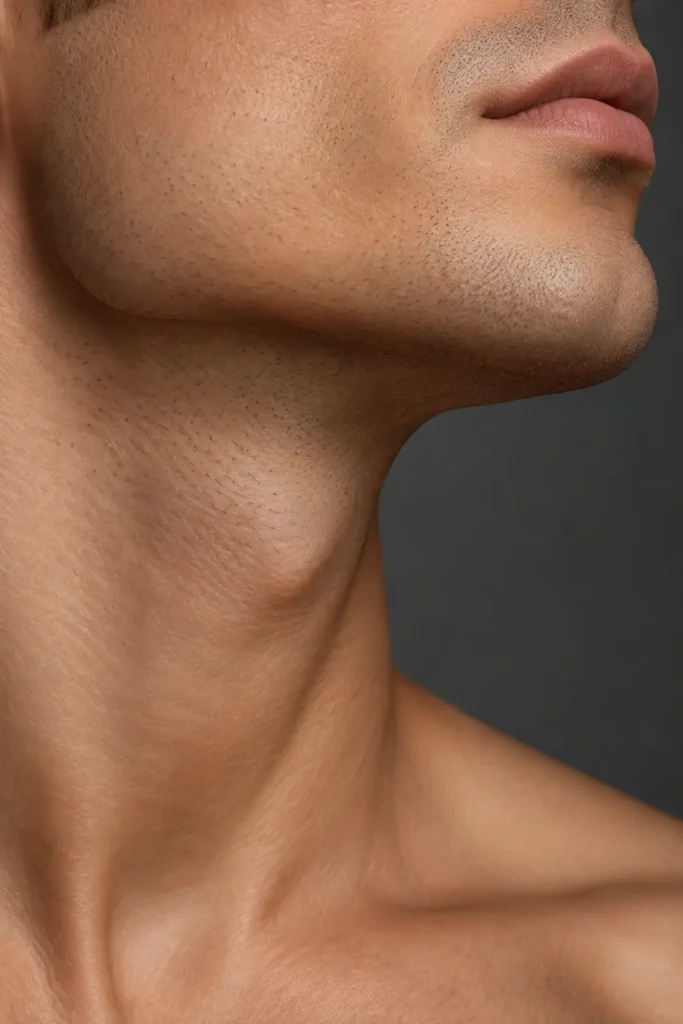
Jaw Implant in Turkey: A Sharper Jawline Without Bone Surgery is an increasingly popular option for people who want a more defined lower face without undergoing complex jawbone reconstruction. Jaw implants in Turkey enhance the shape, width, and projection of the jawline by adding carefully selected implants around the existing bone structure. This procedure helps create stronger facial contours, improves the balance between the chin and jaw, and addresses concerns about a naturally weak or narrow jawline. For individuals seeking a noticeable yet natural-looking facial enhancement, jaw implants offer a customizable approach that does not require cutting or repositioning the jawbone.
Table of Contents
ToggleWhat Is a Jaw Implant and How Does It Work?
A jaw implant is a biocompatible medical device that enhances the contours of the lower jaw. Surgeons typically use solid silicone or other medical-grade implant materials to add definition to specific areas of the jawline.
Unlike orthognathic surgery, which involves repositioning the jawbones to correct structural or functional problems, jaw implant surgery focuses primarily on facial appearance.
The procedure involves positioning implants along the existing jawbone to improve its visible contours. Depending on individual anatomy and aesthetic goals, implants can enhance the jaw angles, increase lower facial width, or create a more structured transition between the jaw and chin.
Jaw implants commonly address concerns such as:
A naturally narrow or underdeveloped jawline
Limited definition around the jaw angles
Facial proportions that appear unbalanced
A rounded lower face with minimal angular definition
Differences in jawline contour between the two sides
A desire for stronger masculine or more structured facial features
Although jaw implants change the appearance of the lower face, they do not correct bite problems, jaw misalignment, or other functional skeletal conditions.
Can You Get a Sharper Jawline Without Bone Surgery?
Yes. Jaw implants can create a sharper and more prominent jawline without cutting, reshaping, or repositioning the jawbone.
The procedure works by adding volume and projection to areas where the existing skeletal structure lacks definition. Surgeons select implants according to the patient’s facial proportions, soft tissue thickness, and desired appearance.
For example, someone with a narrow lower face may benefit from implants that increase the width of the jaw angles. Another person may need additional projection along the posterior jawline to create a more defined facial profile.
However, jaw implants do not eliminate excess facial fat or tighten significantly loose skin. Patients with substantial fullness beneath the chin or reduced skin elasticity may require a different treatment approach.
A detailed facial examination helps determine whether implants alone can achieve the desired improvement.
How Do Jaw Implants Change Facial Appearance?
The jawline plays an important role in defining the overall shape of the face.
A well-proportioned jaw creates a visible transition between the cheeks, lower face, and neck. When the jaw angles lack projection, this transition may appear softer.
Jaw implants can enhance several aesthetic features:
Jawline definition: Creates a more noticeable contour along the lower face.
Lower facial width: Adds structure to a naturally narrow jaw.
Facial symmetry: Helps improve certain contour differences between the two sides.
Profile balance: Strengthens the relationship between the jaw, chin, and neck.
Facial proportions: Supports a more balanced appearance when viewed from different angles.
The degree of improvement depends on implant design, placement, existing anatomy, and surrounding soft tissues.
Who Is a Good Candidate for Jaw Implant Surgery?
Jaw implant surgery generally suits adults who want to improve the definition of their lower face and have realistic expectations about the procedure.
People with a naturally small or narrow jaw structure often consider this treatment because they want greater angular definition without changing the position of their jawbones.
Suitable candidates typically have good general health, stable facial development, and sufficient soft tissue support around the intended implant area.
An experienced aesthetic plastic surgeon evaluates the patient’s facial anatomy, medical history, skin quality, and aesthetic expectations before recommending treatment.
Certain conditions require additional consideration. Active infections, uncontrolled medical conditions, previous facial surgeries, or significant skeletal abnormalities may affect treatment planning.
Patients who experience difficulty chewing, jaw misalignment, or other functional concerns may need evaluation by an oral and maxillofacial surgeon rather than cosmetic implant surgery alone.
Are Jaw Implants Suitable for Both Men and Women?
Yes. Jaw implants can enhance facial contours in both men and women, although aesthetic preferences and implant designs may differ.
Some male patients prefer a wider, more angular lower face with prominent jaw angles. Others want subtle improvements that preserve their existing facial characteristics.
Female patients may seek additional jawline definition while maintaining softer facial proportions.
However, there is no universal ideal jaw shape for either gender.
The surgeon considers the patient’s natural features, personal preferences, and overall facial harmony when selecting the implant.
How Is Jaw Implant Surgery Performed in Turkey?
Jaw implant surgery typically begins with a detailed consultation and facial assessment.
During this appointment, the surgeon examines the relationship between the jawline, chin, cheeks, and neck. Photographs and, when necessary, three-dimensional imaging help evaluate the underlying anatomy.
The surgeon then discusses implant size, shape, placement, and expected changes.
Step 1: Anesthesia and Surgical Preparation
Surgeons commonly perform jaw implant surgery under general anesthesia, although the anesthesia plan depends on the procedure and individual circumstances.
The medical team prepares the surgical area and follows infection-prevention protocols.
Step 2: Creating the Incision
The surgeon makes an incision to access the intended implant location.
Depending on the implant design and surgical approach, the incision may sit inside the mouth or in another carefully selected area.
An intraoral incision avoids a visible external skin scar, although it requires particular attention to oral hygiene during recovery.
Step 3: Positioning the Jaw Implant
The surgeon creates a pocket near the jawbone and positions the implant to enhance the desired contour.
Careful placement helps maintain facial balance and reduces the risk of implant movement.
In some cases, the surgeon uses fixation techniques to secure the implant.
Step 4: Closing the Incision
After checking the implant position, the surgeon closes the incision with appropriate sutures.
The medical team then monitors the patient during the initial recovery period.
Surgery duration varies according to the number of implants, the surgical approach, and whether the patient undergoes additional procedures.
Jaw Implant vs. Jaw Filler: Which Creates Better Definition?
People interested in a sharper jawline often compare permanent implants with injectable dermal fillers.
Both treatments can improve lower facial contours, but they work differently.
Jaw implants provide structural augmentation through surgically placed medical devices. They suit patients seeking a substantial or long-lasting change in jaw shape.
Jaw fillers add temporary volume through injections. They generally suit patients who want a modest enhancement without surgery.
The main differences include:
Longevity: Implants aim to provide long-term structural enhancement, while most fillers gradually break down.
Recovery: Fillers usually involve less downtime than surgery.
Customization: Both approaches allow contour adjustments, but implants can provide greater structural projection.
Maintenance: Fillers generally require repeat treatments to maintain their appearance.
Risks: Surgery involves anesthesia, incisions, and implant-related complications, while fillers carry injection-related risks, including rare vascular complications.
Neither treatment works equally well for every patient.
Individuals seeking subtle changes may prefer fillers, while those wanting a more substantial structural enhancement may consider implants.
How Long Does Recovery Take After Jaw Implant Surgery?
Recovery after jaw implant surgery varies depending on the surgical technique, implant size, and individual healing response.
Swelling, tenderness, tightness, and temporary discomfort commonly occur during the first several days.
Some patients also experience bruising or temporary changes in sensation around the lower face.
The First Week After Surgery
During the first week, swelling is often most noticeable.
Patients may need to follow a soft-food diet, particularly when the surgeon uses an incision inside the mouth.
The surgeon may recommend specific oral hygiene measures, prescribed medications, and restrictions on strenuous activities.
Sleeping with the head elevated can help manage postoperative swelling.
Weeks Two to Four
Many patients notice gradual improvements in swelling and discomfort during the following weeks.
Depending on their recovery and the demands of their work, some return to routine activities within one to two weeks.
However, strenuous exercise, contact sports, and activities that place pressure on the jaw may require a longer break.
The surgeon determines when these activities are safe to resume.
When Will the Jawline Look Natural?
The jawline may initially appear wider or more prominent because of swelling.
As the surrounding tissues settle, the contours gradually become clearer.
Patients often notice meaningful improvements over several weeks, although residual swelling and tissue adaptation can continue for several months.
The final appearance depends on the healing process and individual facial anatomy.
Are Jaw Implants Permanent?
Jaw implants aim to provide long-term enhancement and do not dissolve like injectable fillers.
However, describing them as permanently maintenance-free would be inaccurate.
Some patients keep their implants for many years without requiring further surgery. Others may need implant removal, repositioning, or replacement because of complications or changing aesthetic preferences.
Potential complications include infection, implant displacement, asymmetry, persistent discomfort, changes in sensation, and dissatisfaction with the appearance.
Rare complications may involve pressure-related changes to the underlying bone or injury to nearby structures.
Careful surgical planning and appropriate follow-up help reduce avoidable risks, but no surgical procedure guarantees a complication-free experience.
Why Do International Patients Consider Jaw Implant Surgery in Turkey?
Turkey attracts international patients seeking cosmetic facial procedures because it offers access to specialized surgical services and medical facilities in several major cities.
Patients researching Facial Implants in Turkey often compare surgeon qualifications, hospital standards, treatment planning, and postoperative care arrangements.
For individuals interested in jaw implants in Turkey, understanding the surgeon’s experience, implant options, and recovery process is an important part of choosing the right treatment approach. A personalized consultation helps patients determine whether jaw augmentation matches their facial structure and aesthetic expectations.
Cost also influences treatment decisions. However, the total expense depends on implant materials, surgical complexity, anesthesia, facility charges, and the services included in the treatment package.
Patients exploring Facial Surgeries in Turkey should prioritize medical qualifications and safety rather than choosing a provider based solely on price.
Important considerations include the surgeon’s relevant training, experience with jaw implants, facility accreditation, communication, and access to follow-up care.
International patients should also plan enough time in Turkey for early postoperative assessments.
Flying immediately after surgery may interfere with recovery and complicate access to medical care if unexpected symptoms develop.
Before traveling, patients should discuss their medical history, expected recovery period, and arrangements for follow-up appointments after returning home.
Can Jaw Implants Be Combined With Other Facial Procedures?
Jaw implants sometimes form part of a broader facial contouring plan.
For example, a patient with limited jaw definition and a recessed chin may benefit from an assessment of both areas.
Chin augmentation can improve forward projection, while jaw angle implants primarily enhance the sides and back of the lower jaw.
Some patients also ask about neck liposuction when excess fat beneath the chin reduces jawline visibility.
However, combining procedures increases surgical complexity and may affect recovery time.
The surgeon evaluates whether multiple treatments provide a meaningful aesthetic benefit and whether the patient’s health supports the proposed surgical plan.
The objective is to improve facial balance without creating excessive width, projection, or an unnatural appearance.
Frequently Asked Questions About Jaw Implants in Turkey
1. Can Jaw Implants Make My Face Look More Masculine?
Jaw implants can create a wider, more angular lower face, which some patients associate with masculine facial features. The surgeon adjusts implant size and shape according to the patient’s anatomy and preferences. A natural-looking enhancement depends on maintaining appropriate proportions between the jaw, chin, and other facial structures.
2. Will Jaw Implant Surgery Leave Visible Scars?
Many surgeons place jaw implants through incisions inside the mouth, which avoids visible scars on the external skin. However, incision placement depends on the implant type and surgical technique. Patients should discuss the planned incision and potential scarring with their surgeon before treatment.
3. Can Jaw Implants Correct an Asymmetrical Jawline?
Jaw implants can improve certain differences in jawline contour by adding projection or width to selected areas. However, they cannot correct every type of facial asymmetry. Significant skeletal differences, bite problems, or jaw misalignment may require alternative surgical approaches.
4. Is Jaw Implant Surgery Painful?
Patients receive anesthesia during surgery, so they should not experience surgical pain while the procedure takes place. Afterward, swelling, pressure, tenderness, and discomfort are common. Surgeons typically provide a pain-management plan and recovery instructions. Severe or worsening pain requires prompt medical assessment.
5. How Much Does Jaw Implant Surgery Cost in Turkey?
The cost of jaw implant surgery in Turkey varies according to the surgeon’s experience, implant type, hospital facilities, anesthesia, and treatment complexity. Additional services such as imaging, accommodation, and postoperative appointments may influence the overall price. Patients should request a personalized quotation that clearly identifies the included services and potential additional expenses.