


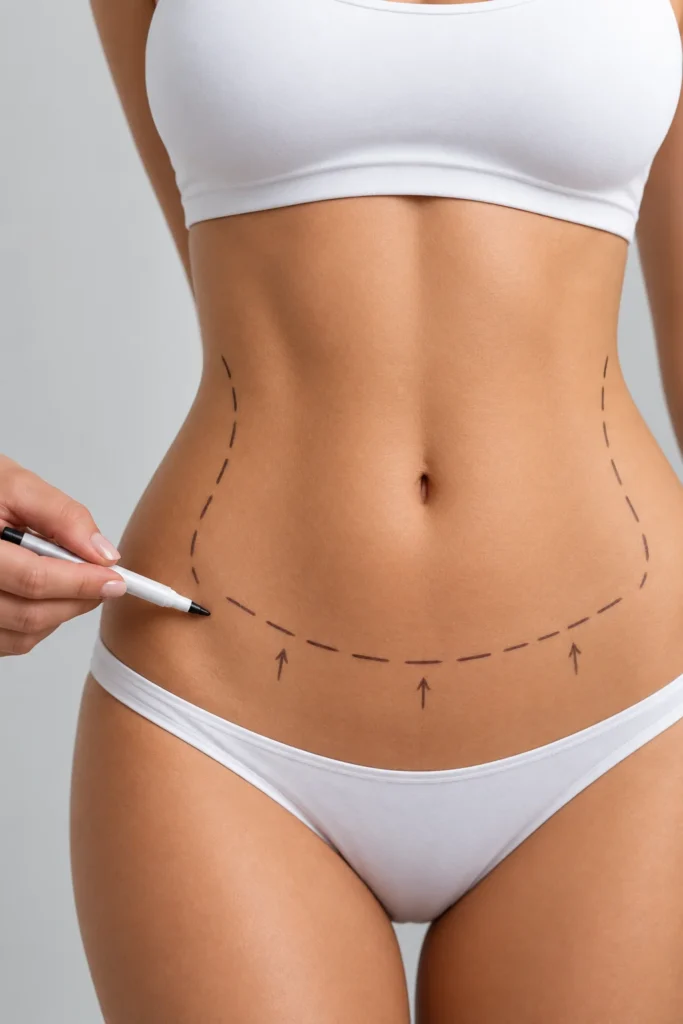
Tummy Tuck and Liposuction: Why Combine Them? Surgeons often combine these procedures because they address two different concerns that frequently appear together: excess abdominal skin and stubborn fat deposits. A tummy tuck tightens the abdominal area and removes loose skin, while liposuction reshapes nearby fat pockets. When a suitable patient undergoes both procedures within the same surgical plan, the combination may create smoother contours, a firmer abdomen and a more balanced transition between the waist, stomach and hips.
Many people assume that a tummy tuck and liposuction provide the same benefits. In reality, each procedure targets a separate aspect of body contouring. Liposuction focuses on fat reduction, whereas a tummy tuck focuses mainly on loose skin, weakened abdominal tissues and changes in the shape of the midsection.
Combining the two does not simply mean adding one procedure to another. The surgeon evaluates the entire torso and creates a personalised plan that considers skin quality, fat distribution, muscle condition, waist definition and overall body proportions. This broader approach often produces a more harmonious appearance than treating only one concern.
Table of Contents
ToggleWhat Is the Difference Between a Tummy Tuck and Liposuction?
A tummy tuck, also known as abdominoplasty, reshapes the abdominal area by removing excess skin and improving the firmness of the abdominal wall. Pregnancy, major weight loss, ageing and changes in body weight may stretch the skin and weaken the tissues beneath it. Diet and exercise strengthen the body, but they do not always correct significant skin laxity.
During a tummy tuck, the surgeon usually makes an incision across the lower abdomen. The exact length depends on the amount of excess skin and the patient’s anatomy. The surgeon removes the loose tissue, repositions the remaining skin and may bring separated abdominal muscles closer together when necessary.
Liposuction follows a different principle. It removes localised fat through thin instruments called cannulas. The surgeon inserts these cannulas through small incisions and carefully shapes specific areas. Common treatment zones include the abdomen, waist, flanks, back, hips and upper thighs.
Liposuction does not remove large amounts of loose skin. A patient with firm skin and stubborn fat may achieve a good improvement through liposuction alone. However, a patient with both fat accumulation and significant skin laxity may need a tummy tuck to achieve a firmer contour.
This distinction plays an important role for people researching Tummy Tuck in Turkey or comparing international body contouring options. A proper consultation should identify whether fat, skin, muscle separation or a combination of these factors causes the main concern.
Why Do Surgeons Combine Tummy Tuck and Liposuction?
The abdomen does not exist as an isolated area. Its appearance depends on the relationship between the front of the stomach, the waistline, the flanks and the lower back. A tummy tuck may flatten the front of the abdomen, but untreated fat around the waist may still reduce overall definition.
Liposuction helps the surgeon refine these surrounding areas. By reducing selected fat deposits, the surgeon may create a smoother transition from the abdomen to the hips and back. This approach supports a more proportionate shape rather than focusing only on the central stomach.
The combination may also address concerns that a single procedure cannot fully correct. For example, removing loose skin without shaping the waist may leave the patient with a flatter abdomen but limited contour improvement. In the same way, removing fat without addressing hanging skin may not create the firmness the patient expects.
Surgeons may combine the procedures to achieve several goals:
Remove loose or hanging abdominal skin
Reduce stubborn fat around the abdomen and waist
Improve the shape of the lower stomach
Define the waistline more clearly
Create a smoother contour between treated areas
Address abdominal muscle separation when present
Improve the overall proportions of the torso
The surgeon does not necessarily perform extensive liposuction in every combined operation. The amount and location of fat removal depend on circulation, tissue safety, skin quality and the patient’s individual needs.
Who May Benefit from Combining These Procedures?
People who have both excess abdominal skin and resistant fat deposits may benefit from a combined surgical plan. These concerns often appear after pregnancy, major weight loss or repeated weight fluctuations.
Pregnancy stretches the abdominal skin and may separate the central abdominal muscles. Even after returning to a stable weight, some people notice a persistent lower abdominal bulge, loose skin or changes around the waist. Exercise may improve strength, but it does not remove excess skin or directly repair significant muscle separation.
Major weight loss may create a similar combination of concerns. The body loses volume, but the skin does not always contract enough to match the new shape. Some patients also retain localised fat deposits around the flanks or upper abdomen. A tummy tuck removes the loose skin, while liposuction helps refine the remaining contours.
A suitable candidate generally has realistic expectations, stable body weight and good general health. The person should also understand that body contouring surgery does not replace weight-loss treatment. These procedures work best when the patient already approaches a comfortable and maintainable weight.
Smoking, uncontrolled health conditions, certain medications and future pregnancy plans may affect timing or suitability. The surgeon reviews medical history, previous operations, lifestyle habits and personal goals before recommending a procedure.
People exploring Liposuction in Turkey sometimes expect liposuction alone to tighten the abdomen. During consultation, the surgeon should assess skin elasticity carefully. If loose skin forms the main concern, liposuction alone may not deliver the desired shape.
How Does the Combined Surgery Work?
The surgical plan begins long before the operation. During consultation, the surgeon examines the abdomen from different angles and evaluates the skin, fat layers, muscle structure and existing scars. Photographs and measurements may help with planning.
The surgeon then identifies the areas that require fat reduction and the amount of skin that needs removal. Some patients need liposuction mainly around the flanks, while others benefit from treatment across the upper abdomen, waist or back.
On the day of surgery, the medical team prepares the patient for general anaesthesia. The exact order of the procedures varies according to the surgeon’s technique and the planned treatment areas.
The surgeon may begin with liposuction to reduce selected fat deposits and shape the torso. Small incisions provide access for the cannulas. Controlled movements remove fat while preserving a smooth contour.
The tummy tuck portion usually involves an incision placed low on the abdomen, where underwear may cover the scar. The surgeon lifts the abdominal skin, evaluates the muscle layer and tightens separated tissues when appropriate. The surgeon then removes excess skin and closes the incision carefully.
A full tummy tuck usually includes repositioning the belly button because the surgeon moves the surrounding skin. A mini tummy tuck treats a smaller area below the navel and does not always require belly button repositioning. The patient’s anatomy determines which technique fits best.
Drains may help remove fluid during the early healing period, although some surgeons use techniques that reduce or eliminate the need for them. Compression garments support the treated areas and help manage swelling.
What Are the Main Advantages of the Combination?
The greatest advantage comes from treating multiple causes of abdominal contour concerns within one plan. Loose skin, localised fat and weakened abdominal tissues often contribute to the same visual problem. Addressing only one factor may create an incomplete improvement.
A combined approach may offer more comprehensive contouring. The tummy tuck firms the central abdomen, while liposuction shapes the waist and surrounding areas. Together, these procedures may create a more natural flow across the torso.
Patients may also prefer one anaesthesia and one recovery period instead of scheduling two separate operations. However, convenience should never outweigh safety. The surgeon must consider the total operating time, treatment extent and patient’s medical condition.
Another benefit involves surgical planning. When one surgeon performs both procedures together, they can shape the body as a connected structure. The surgeon sees how skin removal affects the waist and how fat reduction changes the abdominal proportions.
People comparing Body Surgeries in Turkey should focus on the quality of the treatment plan rather than the number of procedures included in a package. A thoughtful plan targets the patient’s actual anatomy and avoids unnecessary treatment.
Does Combining Them Improve Waist Definition?
A tummy tuck mainly improves the front of the abdomen. Although removing loose skin may create a flatter appearance, it does not always produce strong waist definition on its own.
Liposuction may enhance the waist by reducing fat around the flanks and sides of the torso. The surgeon can create a more noticeable transition between the rib area, waist and hips. The degree of change depends on bone structure, muscle shape, fat distribution and skin quality.
Patients should maintain realistic expectations. Surgery enhances existing proportions, but it does not give every person the same silhouette. A naturally straight torso will not always develop an exaggerated hourglass shape. A responsible surgeon aims for balance rather than an artificial contour.
Overly aggressive fat removal may create irregularities, loose skin or circulation problems. Careful, controlled shaping supports a smoother and safer appearance.
What Should Patients Expect During Recovery?
Recovery varies according to the extent of surgery, the amount of liposuction and the patient’s general health. Because the operation treats several tissue layers, patients usually need time away from physically demanding work and strenuous exercise.
Swelling, tightness, bruising and temporary numbness commonly occur during the early healing period. The abdomen may feel firm, and patients often walk slightly bent forward for the first few days to reduce tension on the incision.
Light walking supports circulation and helps the body recover. The surgeon provides instructions about compression garments, wound care, showering, sleeping positions and medication. Patients should follow these instructions closely.
Many people return to desk-based work after a few weeks, although individual recovery differs. Jobs that involve lifting, bending or prolonged physical activity usually require more time.
Patients should avoid heavy lifting and intense abdominal exercise until the surgeon confirms that the tissues have healed sufficiently. Returning to exercise too early may place stress on the incision and muscle repair.
Swelling decreases gradually rather than disappearing overnight. Early changes may look encouraging, but the final contour develops over several months. Scar tissue also changes with time. The incision usually appears firm or pink at first, then gradually softens and fades.
Regular follow-up appointments allow the surgeon to monitor healing and answer questions. Patients should contact the clinic promptly if they notice sudden swelling, severe pain, shortness of breath, fever, unusual discharge or significant changes in the treated area.
Will the Results Last?
Tummy tuck and liposuction results may remain long-lasting when the patient maintains a stable weight and healthy lifestyle. The procedures remove excess skin and selected fat cells, but they do not stop ageing or prevent future weight changes.
Significant weight gain may enlarge the remaining fat cells and stretch the skin again. Major weight loss after surgery may create new looseness. Future pregnancy may also stretch the abdominal tissues and affect muscle tightness.
For these reasons, surgeons often advise patients to schedule a tummy tuck after completing planned pregnancies and reaching a stable weight. This timing helps protect the result.
Regular exercise, balanced nutrition, hydration and consistent weight management support the new contour. Patients do not need to follow an extreme routine, but long-term habits make a meaningful difference.
Are There Additional Risks When Procedures Are Combined?
Every surgical procedure involves risks. Combining operations may increase operating time and expand the treatment area, so careful patient selection matters.
Potential risks include bleeding, infection, fluid accumulation, delayed wound healing, contour irregularities, numbness, prominent scarring and blood clots. Anaesthesia also carries its own risks.
The surgeon reduces these risks through medical screening, detailed planning, appropriate surgical limits and postoperative monitoring. Patients also play an active role by sharing their full medical history, stopping smoking, following medication instructions and attending follow-up visits.
Choosing an experienced plastic surgeon and an appropriately equipped medical facility holds greater importance than choosing a procedure based only on cost or online photographs. Patients researching Tummy Tuck in Turkey should review the surgeon’s qualifications, the clinic’s safety standards, aftercare arrangements and communication process.
Frequently Asked Questions
1. Is liposuction always included in a tummy tuck?
No. A tummy tuck and liposuction serve different purposes. Some patients mainly need excess skin removal and muscle tightening, while others also have stubborn fat around the abdomen or waist. The surgeon recommends liposuction only when it contributes to a safer and more balanced result.
2. Can liposuction tighten loose abdominal skin?
Liposuction removes localised fat but does not directly remove loose skin. Patients with good skin elasticity may notice some natural contraction after fat removal. However, significant hanging or stretched skin usually requires a tummy tuck.
3. How much weight can I lose with a tummy tuck and liposuction?
These procedures focus on body contouring rather than weight loss. The surgeon removes selected fat and excess skin to improve shape. Patients usually achieve the best results when they reach a stable weight before surgery.
4. Will I have scars after the combined operation?
A tummy tuck creates a lower abdominal scar, and liposuction requires several small access incisions. The surgeon places the tummy tuck incision as low as practical and keeps liposuction incisions small. Scars change gradually over time, but they do not disappear completely.
5. When will I see the final result?
Patients notice a flatter and more defined abdomen during the early recovery period, but swelling temporarily hides part of the result. The contour becomes clearer over the following months as swelling decreases and the tissues settle. Final healing and scar maturation continue for several months.